
Live Blackjack Online Casinos in the UK: How They Work
 Available in GB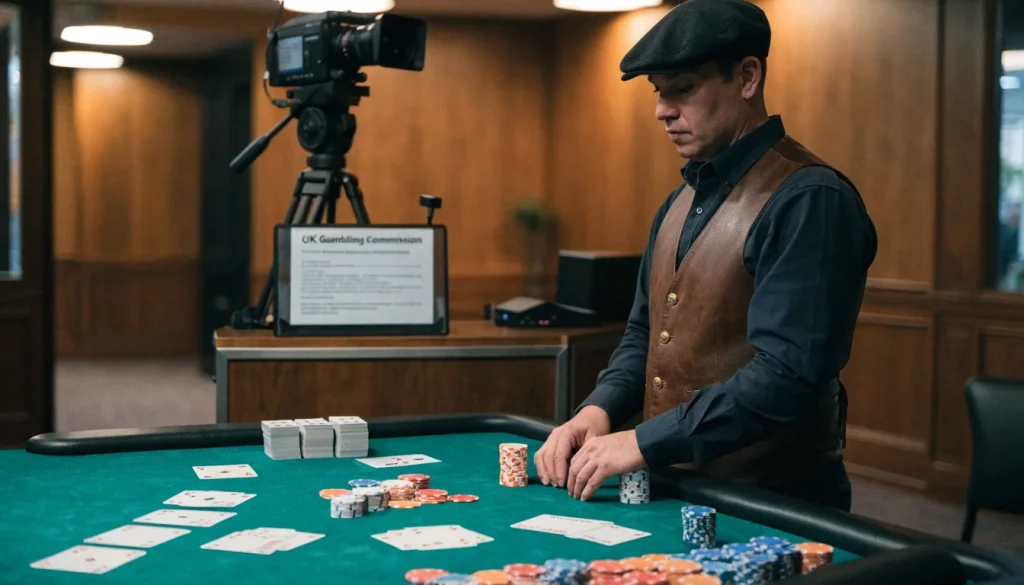
A practical look at streamed dealers, table rules, house edge, payments and the terms that shape an online blackjack session.
A Live Blackjack Table, and the Licence Behind It
A live blackjack table is a casino game presented through a video stream rather than reduced to an entirely digital interface. A dealer appears on screen, the table is filmed in real time, and the online casino provides the route by which a remote customer joins the game. The visual grammar resembles a traditional casino: cards, felt, chips, a dealer and a defined table. The room, however, is elsewhere. A screen has made the distance unremarkable.
That arrangement explains the enduring appeal of live blackjack. It is not merely a black-and-white grid of buttons producing a result. The dealer’s movements, the changing state of the table and the presence of other participants give the game a social surface, even when the customer is sitting alone. The experience belongs to the wider family of live casino products, but blackjack has a particularly recognisable place within it. Its name travels easily between the physical casino, the television screen and the modern online lobby.
The word “casino” has a legal meaning as well as a theatrical one. Under the Gambling Act 2005, it describes an arrangement through which people are given the opportunity to take part in casino games. An online blackjack service falls within that broad idea even though the building, tables and dealer may be located somewhere other than the customer’s home. The law is concerned with the gambling service being offered, not with whether the setting has velvet curtains.
For online blackjack casinos serving Great Britain, the central institution is the UK Gambling Commission. It regulates gambling activity in the United Kingdom, including online casino services, and it is the sole regulator responsible for commercial gambling in Great Britain. The distinction matters because the legal map is not quite identical to the everyday use of “UK”. The Gambling Act 2005 applies in England, Wales and Scotland, but not Northern Ireland. Great Britain, in the licensing language used for remote gambling, means England, Scotland and Wales.
Crazy Time Live Casino Game Show in the UK
The Commission’s reach follows the customer as well as the equipment. A remote operator offering gambling to consumers in Great Britain must hold the relevant Commission licence even when the key equipment supporting the service is situated elsewhere. A studio, server or corporate office outside the country does not, by itself, remove the service from the British regulatory framework. Geography may complicate a business’s operations; it does not provide a simple escape from the licensing requirement.
This is the point at which a live table becomes more than a piece of entertainment software. The operator behind it is not simply displaying a dealer and collecting wagers. It is running a regulated remote gambling service. The licence belongs to the business offering the gambling, and the Commission issues operating licences to those businesses. It also grants personal licences to individuals who operate within Great Britain, creating a second layer of responsibility around the people involved in the industry.
Online Bingo in the UK: Rooms, Slots and Rules
For a customer choosing among blackjack casinos online, the licence is therefore part of the product’s identity. A polished stream, a familiar logo and an elaborate lobby can all be imitated by design. A lawful service for the British market must stand within the local licensing system. The regulatory question is not decorative text in a website footer; it is the institutional answer to who is permitted to offer the game and under which authority.
That system also reflects a particular British habit of mind. Gambling is permitted, but permission is attached to supervision. The state does not pretend that a casino ceases to exist because it arrives through a browser, nor that a distant studio makes responsibility vanish. Instead, commercial gambling in Great Britain is placed under one specialist regulator, with operating permissions allocated to companies and personal permissions attached to relevant individuals. A modest piece of online entertainment thus carries a fairly substantial legal shadow.
The live format can make that shadow easy to overlook. The dealer may be friendly, the table may look informal and the interface may resemble a social broadcast. Yet the underlying activity remains casino gambling. The image of a person dealing cards does not turn it into a private game, and the fact that the table is watched through a screen does not make it an unregulated novelty.
The presence of a dealer and a physical table is a presentation choice, not a guarantee of fairness or control over the game outcome.
The same caution applies to the language surrounding “UK blackjack casinos”. That phrase can refer to a service aimed at customers in Great Britain, but the meaningful question is whether the operator has the required local authorisation for that market. The location of a studio is not a substitute for the status of the operator. Neither is the smoothness of the stream.
Live blackjack is still gambling, with no certainty attached to any result. It should be approached only with money that can be afforded to lose. The licence provides a regulatory foundation; it does not transform chance into control. That distinction is worth keeping visible before the cards appear.
What Makes a Blackjack Casino Worth Considering
The phrase “best blackjack casino” sounds as though it should produce a neat table of winners. Real assessment is less theatrical. A casino may suit one player because its live tables are easy to follow, while another may care more about payment arrangements, account controls or the clarity of its terms. Without a defined test, “best” is merely a decoration placed around an advertisement.
A more useful approach is to examine the operator before examining the table.
Start with the licence
The first check is not the welcome offer, the colour of the interface or the number of dealers appearing on screen. It is whether the operator is authorised to serve customers in Great Britain. Remote operators serving Great Britain must hold the relevant Gambling Commission licence. That requirement applies to the business offering the gambling service, rather than disappearing because the website, company or technical equipment is located elsewhere.
The UK Gambling Commission’s public register is therefore the proper starting point. The operator’s name, trading name and stated website address should be compared with the register entry. The details need to correspond closely enough to establish that the site being considered is the licensed business, not an unrelated brand borrowing familiar language.
Casino Games: Slots, Live Tables and Online Formats
This is a small piece of clerical work with unusually large consequences. A polished website proves little. A logo proves less.
The register should be checked before an account is funded, not after a problem has appeared. Licence information displayed on a casino’s own page can be useful as a clue, but it is not a substitute for checking the regulator’s record. The status of an online business can change, and a page that once looked authoritative may remain online after its circumstances have altered.
A specialist affiliate review reported that a register dated 26 September 2026 did not show a LuckyPays entry under that brand or its stated domain, including luckypays.io. That is a report about a particular register check, not a timeless finding about every site using a similar name. It illustrates why the register should be opened and examined directly rather than treated as a badge copied from a promotional page.
Match the casino to the intended use
Once the regulatory identity is clear, the practical question is whether the casino actually fits the intended form of play. A site described as a blackjack destination may offer several different experiences under one heading: a live dealer at a streamed table, a computer-generated game, or a branded product supplied by an external provider. Those are not interchangeable simply because each displays cards and a felt layout.
The description of the table should make clear what is being offered. It should identify whether a human dealer is present, how the table is accessed and which information is visible before participation begins. Vague claims about a “premium” or “authentic” experience do not answer those questions. Clear presentation does.
Checking the catalogue
A large selection of games is not always a virtue; it can be more valuable to have an intelligible selection than a crowded lobby where information is difficult to find.
The same scrutiny belongs to the casino’s general catalogue. A large selection is not automatically a virtue. It can mean useful choice, or it can be a crowded lobby in which the relevant information is difficult to find. A smaller, intelligible selection may be more valuable than a long menu of games presented without context.
Read the important pages, not just the landing page
Terms and conditions are where an operator’s habits become visible. The account rules, withdrawal conditions, identity-check information and responsible-gambling pages should be understandable without detective work. Important restrictions should not be concealed behind slogans about speed, luxury or excitement.
Payment information also deserves plain reading. The issue is not merely whether a deposit method is displayed, but whether the casino explains how deposits, withdrawals and verification relate to one another. A method that appears available at the beginning may not tell the whole story of completing an account transaction. The wording should be consistent across the relevant pages.
Privacy and customer-support information matter for the same reason. An operator asking for personal and financial details should explain how those details are handled and how support can be reached. Broken links, contradictory instructions and pages that avoid direct answers are not proof of wrongdoing, but they are legitimate reasons to pause.
Separate evidence from ranking
Reviews can help identify questions to investigate, but they should not be mistaken for independent league tables. A “top” label may reflect commercial arrangements, editorial preference or a temporary promotion rather than a measured comparison of every casino available in Great Britain. It cannot replace checking the licence and reading the operator’s own conditions.
Live Baccarat Online Casinos in the UK: What to Know
The more reliable assessment is therefore a checklist: a matching register entry, a clear description of the blackjack format, accessible terms, transparent account information and a site whose claims can be tested against its actual pages. Any ranking comes afterwards, if it comes at all.
That approach also keeps the judgement proportionate. A casino need not be declared universally superior to be worth considering. It needs to be identifiable, properly authorised and intelligible enough for its offer to be assessed without guesswork. The sensible choice is not necessarily the loudest one.
The Dealer on Screen: Live Tables in Context
A live-dealer blackjack table is neither quite a traditional casino floor nor quite a conventional online game. It is a meeting point between the two. The dealer appears on screen, the table is presented through a video feed, and the surrounding interface carries the practical work of an online casino: account access, wager selection and the display of the game’s progress.
That distinction matters. A digital blackjack game can reproduce the appearance of cards and a table without involving a person at all. A live table places an actual dealer at the centre of the scene. The dealer handles the cards, presents the action and maintains the rhythm of the table while software connects that physical setting with people playing remotely. The result is an online casino live dealer experience that borrows the theatre of the casino without requiring the building itself.
Live dealer technology combines the social atmosphere of a physical casino with the convenience of a digital interface.
The screen therefore becomes a kind of stage. There may be a real table, studio lighting, cameras and a dealer whose presence gives the game a social shape. The online participant does not merely watch a sequence of symbols appear; the participant observes a person conducting a familiar casino ritual. Even when the interaction is limited, the human figure changes the atmosphere. A hand has a beginning, a pause and an ending in a way that feels less like pressing a button and more like joining an organised occasion.
This is the central appeal of a live dealer Blackjack casino UK players encounter online: the sense that the game is being hosted rather than simply generated. The distinction is not a guarantee of better entertainment, fairer outcomes or more favourable results. It is a difference in presentation and in the relationship between the player, the table and the person dealing. The dealer adds ceremony. Ceremony, as casinos have long understood, is rarely accidental.
From casino room to living room
The movement from physical casino to remote screen did not erase the older casino culture. It rearranged it. Card games, roulette and other table games could be placed inside an online environment, where the physical setting was supplied by a studio and the audience arrived through a digital connection. A live-dealer table is consequently part of a longer history of adapting casino customs to new rooms and new technologies.
In the United Kingdom, Grosvenor first introduced its live casino games in 2013. The offering included Blackjack, Texas Hold’em and Roulette, bringing several recognisable table games into a live online format. That moment belongs to the broader development of the online casino live dealer model: not the invention of blackjack, naturally, but a significant step in presenting established casino games through a remote, hosted service.
Keno Casinos in the UK: Licensing, Play and Payouts
The choice of games was telling. Blackjack supplied the card-table tradition; Roulette carried the unmistakable wheel; Texas Hold’em brought the social vocabulary of poker. Together they made the live casino look less like a solitary software product and more like a compressed casino floor. The physical casino had always sold more than outcomes. It sold sound, pacing, visibility and the feeling of being among other people. The online version could not reproduce all of that, but it could preserve selected parts.
What “live” changes
In a Blackjack live dealer casino, the dealer is the visible organiser of the table. The interface remains important, but it no longer supplies the entire personality of the game. The dealer’s gestures, announcements and timing give the session a human tempo, while the video presentation lets remote players follow events as they occur.
That does not turn an online table into a physical one. The screen still separates the participant from the room, and the casino remains a commercial service rather than a club of equals. Yet the format occupies an interesting middle ground: remote enough to be accessed online, theatrical enough to retain the manners of the table.
For some, that presence is the point of choosing live dealer blackjack online. For others, it may be unnecessary decoration around a card game. Both reactions are reasonable. The live format is chiefly a change in setting, company and presentation—not a promise about the result. A dealer on screen is still a dealer on screen.
How a Blackjack Hand Unfolds—and Why Winning Is Never Certain
A blackjack hand is a small sequence with a clear beginning, a pause for decisions, and an outcome that cannot be known in advance. In a live online casino, the same structure is presented through a video feed: a dealer sits at the table, cards are dealt, and the game proceeds according to the table’s published conditions. The screen changes the setting, not the uncertainty.
Attention A decision can be sensible without producing a favourable result; no pattern in previous hands can reveal which card is about to appear.
The hand begins during the betting period. Players place a wager in the available betting position, and the table then closes for new wagers. Cards are dealt to the participating positions and to the dealer. The first comparison is not necessarily the final one: the players’ hands are completed before the dealer finishes the dealer hand.
Each player’s turn concerns the cards already held. The aim, in broad terms, is to form a hand stronger than the dealer’s without going beyond the value that the table accepts. A player may choose to receive another card or to keep the existing hand, depending on the decisions offered by that table. Receiving a card can improve a weak total, but it can also take the hand past the permitted value. Keeping a hand avoids that particular risk, while leaving its present strength unchanged.
This is the point at which blackjack resists the fantasy of control. A decision can be sensible without producing a favourable result. The next card remains unknown, and a hand that appears promising can deteriorate immediately. Conversely, a modest hand may survive while the dealer’s position proves weaker. No pattern in the previous hands can reveal which card is about to appear.
Once all player positions have completed their turns, the dealer’s hand is resolved under the table’s fixed procedure. The dealer does not improvise in response to a player’s mood, confidence or wager. The dealer follows the stated conditions, draws when required and stops when the relevant point is reached. Only then can the completed player hands be compared with the completed dealer hand.
Fast Payout Online Casinos in the UK: What to Check
The usual outcomes are straightforward. A player hand can be stronger than the dealer’s, weaker than it, or equal to it. A hand may also go beyond the accepted value before the comparison takes place; that ends the hand for that position. A specially formed opening hand may receive a separate result under the table’s rules, but its treatment belongs to the individual game rather than to a universal promise about blackjack.
A live table makes this process feel more social than an automated interface. There is a dealer, a shared rhythm and other occupied positions, yet the presence of other players does not turn the hand into a collective contest. Each position is assessed on its own terms against the dealer. Another player’s card may be visible on the broadcast, but it does not make the next card predictable or create a reliable route to victory.
That distinction matters when people ask how to win casino blackjack. The hand can be approached carefully, and decisions can be made with an understanding of the game’s structure, but no method removes chance from the deal. A winning hand is an outcome, not a promise. The sensible boundary is equally plain: gambling belongs only within money that can be afforded to lose. Anything beyond that turns a brief card game into a financial problem.
Blackjack Alongside the Other Live Casino Games
A live casino is not a single game with a camera pointed at it. It is a small, shifting room of tables, each with its own rhythm, vocabulary and social temperature. Blackjack sits there as one of the most recognisable card games, but it shares the space with roulette, Texas Hold’em and other formats that ask for rather different kinds of attention.
Roulette
Visually dominated by the wheel, the ball and the pattern of wagers spread across the layout.
Texas Hold’em
A competitive card-table atmosphere where players’ choices are set against one another.
Blackjack
Centres on cards and the dealer’s decisions.
The distinction matters because the phrase “live casino” describes the setting more than the experience. A real dealer, a visible table and streamed play may be common features, while the pace and structure of each game remain separate. A blackjack table centres on cards and the dealer’s decisions. Roulette turns attention towards the wheel and its sequence of outcomes. Texas Hold’em brings a more explicitly competitive card-table atmosphere, with players’ choices set against one another rather than gathered around a single dealer-led contest.
That variety has been part of the British online casino landscape for some time. Grosvenor first introduced its live casino offering in 2013, including Blackjack, Texas Hold’em and Roulette among its card and casino games. The selection is telling: these are not obscure curiosities placed together for decoration, but familiar names that help define what many people mean by a live casino.
Different games, different kinds of attention
Blackjack often appears approachable because its central image is so clear: cards are dealt, a dealer sits opposite, and the table proceeds through recognisable decisions. That familiarity can make it the first casino game considered by someone who wants something more tangible than an automated screen. Yet its presence alongside roulette changes the atmosphere. Roulette is visually dominated by the wheel, the ball and the pattern of wagers spread across the layout. It is a game of observation and anticipation, with no card hand to follow.
Texas Hold’em belongs to the same broad live setting but carries a different social character. The table is still mediated by a dealer, though the drama comes from comparing hands and reading the pace of play. It feels closer to a card room than to the straightforward theatre of a wheel. The label “live” therefore conceals several kinds of performance: the dealer’s presentation, the table’s visual design and the participants’ sense of being present in a shared room.
Other live products may sit nearby as well, including Common Draw, Crazy Time, Dream Catcher and Lightning Roulette. Their presence broadens the casino floor beyond traditional table games, but it does not make blackjack interchangeable with them. A familiar name can create an impression of continuity; the actual experience depends on the game’s structure.
Live Dream Catcher Casino in the UK: What to Check
For a UK casino audience, blackjack is best understood as part of this wider live menu rather than as the whole category. It has the card table, the dealer and the ceremony, but so do neighbouring games in their own ways. The room is shared. The rules are not.
Recommended online casinos
- ChanzeBonus: Slots Welcome Bonus #1 200% up to €500 · Payout speed: 1-3 business days
- AmunbetBonus: Join now and get 450% up to 2,700 GBP + 450 FS · Payout speed: 1-3 business days
- DieselwinBonus: Welcome Pack 250% up to £4000 + 200 FS · Payout speed: 1-3 business days
- SlotoSportBonus: 500% up to £ 10 200+ 777 FS · Payout speed: 1-3 business days
- ZombillionBonus: Welcome Pack 250% up to £4000 + 200 FS · Payout speed: 1-3 business days
- NightLuckBonus: Welcome Pack + 805% Up To 6400€ + 280 FS · Payout speed: 1-3 business days
- EvoSpinBonus: 125% up to €2500 + 125 Free Spins · Payout speed: 1-3 business days
- Revery PlayBonus: 100% up to€1,000+ 100 FS · Payout speed: 1-3 business days
- JetsetspinsBonus: 200% Bonus + 100 Free Spins + Free Royal Wheel · Payout speed: 1-3 business days
- x3betBonus: Welcome Pack 100% Up to £1.000 + 200 Free Spins · Payout speed: 1-3 business days
Joining a Live Blackjack Table Without Losing the Plot
The route from a casino homepage to a live blackjack table is less mysterious than the terminology suggests. An account is created first, followed by the operator’s identity and age checks. In Great Britain, an operator must verify that a customer is aged 18 or over before allowing a deposit into a gambling account. The welcome screen may be glamorous; the age check is the part that matters.
A financial limit must also be set before the first deposit. This is not decorative paperwork. The limit establishes a boundary at account level, and the operator must make the relevant controls accessible afterwards. It is sensible to decide that boundary before entering the casino lobby, when the table graphics and the noise of the betting window have not yet begun their small psychological campaign.
The practical sequence is usually straightforward:
- Open the casino’s live-games area after the account has passed its checks.
- Select blackjack from the available tables.
- Look at the table title, displayed minimum and maximum wagering conditions, seating or participation status, and any information panel supplied by the operator.
- Choose a table and wait for the next open betting window.
- Enter the wager within the account’s financial boundary, then follow the on-screen prompts as the round proceeds.
- Leave through the table or lobby controls rather than treating an open session as an obligation.
A live table may show several players at once, while the dealer manages the physical cards and the platform records each participant’s choices. The interface generally separates the betting area from buttons for decisions and from the running account balance. That separation is useful: it keeps the mechanics visible and makes it harder for a hurried click to masquerade as a considered decision.
Some casinos provide a practice or free-play mode. Such a mode can familiarise a newcomer with the layout and timing, but it is not the same as a real-money session. No deposit is involved in practice, and no winnings can be treated as withdrawable funds. The distinction should remain plain.
Before depositing, the casino’s licence number should be checked against the UK Gambling Commission’s public register. This is an account-opening step, not an ornamental seal placed somewhere in the footer. A register check, age verification and a pre-set financial limit form a modest but meaningful order of operations.
Live play can create the impression that a session should continue because the dealer, table and other players are already present. They are not a summons. Gambling should be limited to money that can be afforded to lose, and the account controls are there to make stopping an ordinary action rather than a dramatic one.
Fastest online casino payouts in the UK: timing explained
Strategy, With the House Edge Still in the Room
Blackjack strategy is best understood as a method for making fewer impulsive decisions, not as a device for turning uncertainty into income. A carefully considered choice may improve the logic of a wager, but it cannot determine the next card, alter the dealer’s hand or remove the casino’s mathematical advantage.
The familiar idea of “basic strategy” is a set of decisions shaped by the cards already showing. It treats the player’s hand and the dealer’s visible card as relevant information, then indicates whether a further card, a stand, a double or a split is the more defensible action in that situation. This is closer to disciplined decision-making than to intuition. A hunch may feel personal; the probability does not.
That distinction matters particularly at a live table. The dealer’s presence, the pace of the action and the movement of other players can make each hand feel like a small social drama. None of those things gives one player control over cards dealt elsewhere. Another participant’s choice may be irritating, but it does not rewrite the underlying chances. Blame is theatrically satisfying and mathematically useless.
A strategy chart can therefore serve as a reference, provided it matches the table’s rules. Blackjack is not one perfectly uniform game: payouts, dealer procedures and available decisions can differ between tables. A chart built for one arrangement may not fit another. The relevant information belongs in the table rules, not in folklore repeated around a chat window.
Attention No winning system guarantees a result; chasing losses by wagering more is an emotional rather than a sensible boundary.
Strategy also has limits beyond the hand itself. It cannot compensate for unsuitable stakes, a series of losses or the temptation to recover money by wagering more. Chasing turns a decision aid into an excuse. The sensible boundary is financial rather than emotional: gamble only what can be afforded to lose, and stop when that money is gone or the planned limit has been reached.
There is no reliable “winning system” that guarantees a result in an online casino, live or otherwise. Progressions that increase a wager after losses merely change the size and timing of exposure; they do not make an unfavourable outcome favourable. The most honest role for strategy is modest: slow the impulse, clarify the choice and leave the uncertainty visible.
Blackjack Online in 2026: The Details That Matter
The label “live blackjack online casino UK 2026” points to a product that sits within a changing regulatory landscape. A casino’s appearance on a comparison page, in an advert or in a search result is not evidence of its current standing. The useful document is the UK Gambling Commission’s public register: the operator’s licence number should be checked there, along with the business name and any domain used for the gambling service, before money is deposited.
That check matters because brands can change ownership, websites can change, and a familiar name can create a confidence it has not earned. One specialist review, referring to a register snapshot dated 26 September 2026, reports no entry for LuckyPays under that brand or under its stated domain, luckypays.io. That is a time-specific observation, not a permanent verdict about every future version of the business. The register remains the proper place for confirmation.
The distinction between blackjack and online slots also deserves attention. Great Britain introduced stake controls for online slot game cycles: the permitted amount is £5 for adults aged 25 and over, and £2 for those aged 18 to 24. A specialist review states that these particular limits do not extend to roulette or blackjack. They should therefore not be treated as a general ceiling for every casino game displayed on the same website.
French Roulette Online Casinos in the UK
This is one reason a Blackjack casino should not be assessed through slot rules alone. A live table has its own wager options, table conditions and game structure, while a slot is governed by a different set of product requirements. The presence of one in a casino lobby tells very little about the other.
The wider framework is still relevant. A British-facing remote casino must hold the appropriate Gambling Commission authorisation, and its status can change independently of the games it hosts. A current register entry is consequently more meaningful than a badge, a promotional paragraph or a confident claim attached to a brand.
For anyone comparing an online casino Blackjack service in 2026, two separate questions should remain separate: is the operator presently listed, and which rules apply to the chosen game? Confusing those questions is how tidy-looking information becomes untidy money advice.
Bonuses, Payment Limits and the Small Print
A blackjack casino bonus can look generous while being useful only under narrow conditions. A promotion may apply to selected games, exclude live tables, or require a particular deposit method. The word “bonus” says little by itself. The terms say the rest.
Before accepting an online casino blackjack bonus, the important points are:
- whether blackjack qualifies, and whether live blackjack is treated differently from other casino games;
- which deposits and payment methods are eligible;
- whether bonus funds, winnings or both are subject to wagering conditions;
- the time allowed for using the promotion;
- any maximum conversion, withdrawal or stake conditions;
- what happens if a withdrawal is requested before the terms have been completed;
- whether a no-deposit bonus requires a qualifying account action before any withdrawal is considered.
That last category deserves particular care. A blackjack casino no deposit bonus may not require an initial payment, but it is not automatically free money. It can still carry identity, game, wagering and withdrawal conditions. The same applies to a no-deposit offer aimed at customers in the UK: its availability and rules must be confirmed in the operator’s current terms, rather than inferred from an advert, review or search result. Promotional copy is the shop window. The small print is the building.
A casino Blackjack bonus offer should also be separated from the ordinary balance used to wager. The account history should make clear which funds are cash and which are promotional, how a cancellation works, and whether accepting one offer prevents participation in another. If those points are difficult to locate, the difficulty is itself relevant.
Payment rules are less decorative. Remote gambling operators in Britain cannot accept credit-card payments for gambling. The restriction also covers credit-card funding passed through a money service business. A digital wallet does not evade it: operators cannot accept wallet payments when that wallet permits credit-card funds to be used for gambling.
Consequently, a payment method should be checked for its funding source, not merely its logo. Debit funds and credit funds are not interchangeable for this purpose. A promotional balance cannot change that rule.
Bonuses remain optional. Any blackjack casino bonus UK promotion should be declined where its conditions are unclear, and gambling should be limited to money that can be afforded to lose.
Live Roulette UK: English-Speaking Dealers and Licensing
Table Rules, Complaints and the Right to Walk Away
The rules displayed beside a live blackjack table deserve more attention than the green felt suggests. They define what happens when the dealer’s hand reaches a particular total, which cards can be split, whether doubling is available, and how a drawn hand is settled. Side bets, insurance, surrender and special blackjack payouts may also have separate conditions. None of these details should be inferred from a familiar layout: the casino’s written rules take precedence.
A careful check also covers the practical machinery around the table. The rules should explain how wagers are confirmed, when betting closes, what happens if the connection fails, and how an unfinished round is resolved. A live table may look like a shared social room, but its terms are still a contract with a screen attached. Read first, click later.
Disagreements do not have to end with an unanswered message. A UK Gambling Commission licensee must provide its own internal complaints procedure. That route should be used first, with the casino explaining how to submit the complaint and what information may be needed. If the matter remains unresolved, the operator must make access available to an approved Alternative Dispute Resolution service. ADR is a formal independent route for eligible disputes, not a promise that every complaint will be upheld.
The same regulatory framework includes an exit door. UK-licensed casinos must provide responsible-gambling tools, including self-exclusion. GAMSTOP can support a broader break from participating online gambling businesses, while an operator’s own self-exclusion facility may apply within that operator’s services. The relevant terms, duration and scope should be understood before activation, since self-exclusion is intended to create distance rather than a temporary pause in a single round.
A financial limit should remain part of the arrangement, and gambling should be confined to money that can be afforded to lose. When the table stops feeling like entertainment, walking away is not a failed strategy. It is the rule that matters most.
Are online casino games licensed and regulated?
Yes. The UK Gambling Commission regulates online casino gambling, and operators serving consumers in Great Britain must hold the relevant Commission licence.
What are the online slot stake limits in Great Britain?
The limit is £5 per game cycle for adults aged 25 and over and £2 for adults aged 18 to 24. These limits do not apply to blackjack or roulette.
Is LuckyPays licensed by the UK Gambling Commission?
The Commission’s public register dated 26 September 2026 does not list LuckyPays under that brand or its stated domain, luckypays.io, so its UKGC authorisation is not verified there.
How do I check if an online casino is licensed in the UK?
Check the UK Gambling Commission’s public register for the operator and confirm that it holds the relevant licence to serve consumers in Great Britain.
What are the UK online casino licensing requirements?
Remote operators offering gambling to consumers in Great Britain must hold the relevant UK Gambling Commission licence, regardless of where their key equipment is located.