
Safe Online Casino UK: The Complete Guide to Playing Without Getting Burned
 Available in GB
UKGC licensing, security checks, fair bonus terms, and 2025-2026 regulation updates — everything you need before you deposit.

Contents
What Separates a Safe Online Casino from a Convincing Fake
The gap between a licensed UK casino and a slick-looking scam site has never been narrower — and that's precisely the problem. Both categories now use identical design templates, accept the same payment methods, and display logos from game providers whose names most players recognise. The difference lies beneath the surface: in licence conditions, independent auditing schedules, fund segregation policies, and a regulatory framework that took two decades to build. Understanding that framework is the single most useful thing you can do before depositing a penny.
In the UK context, a safe online casino means a platform licensed and supervised by the UK Gambling Commission, protected by encryption, independently audited for game fairness, holding player funds in segregated accounts, and operating under transparent, enforceable terms. Strip away any one of those elements and what remains may look like a casino, but it is not a safe one — not in any regulatory sense that matters.
The Gambling Commission has teeth: fines, licence suspension, and outright revocation are all within its statutory powers. None of this makes fraud impossible. What it does is create minimum standards every legal operator must meet, and a clear mechanism for players who feel those standards have been breached. This guide is built around those standards: what they are, how to check them, and what happens when an operator falls short.
UK Gambling Commission (UKGC)
The UKGC is the statutory body responsible for licensing and regulating commercial gambling in Great Britain. Established under the Gambling Act 2005, it oversees online and land-based operators, sets licence conditions through the Licence Conditions and Codes of Practice (LCCP), and has enforcement powers including fines, licence suspension, and revocation. Every operator that legally offers gambling services to players in England, Scotland, or Wales must hold a UKGC remote operating licence. Northern Ireland operates under separate legislation.
RNG (Random Number Generator) — a software algorithm used in online casino games to produce unpredictable outcomes on every spin, hand, or round. UKGC-licensed casinos must have their RNGs independently tested and certified by accredited laboratories such as eCOGRA, iTech Labs, or GLI to confirm that results are statistically fair and not manipulated by the operator.
The UKGC Licence: What It Actually Guarantees
A UKGC licence is not a quality award. It does not mean a casino has the best games, the fastest withdrawals, or the friendliest support team. What it guarantees is a baseline of operational standards, enforced by a regulator with statutory powers. Those standards cover fair game outcomes, transparent terms, responsible gambling tools, anti-money laundering procedures, data protection compliance, and — critically — the protection of player funds in the event of insolvency.
The licence also guarantees access to a complaints process. If a dispute arises, a licensed operator must direct you to an approved Alternative Dispute Resolution (ADR) provider. If the operator ignores the process, that itself becomes a licence condition breach — something the Commission takes seriously. This does not mean every complaint ends in the player's favour, but it does mean the operator cannot simply ignore you without regulatory consequences. Bear in mind, though, that the licence does not test individual games (that is delegated to independent testing houses), does not set odds, and does not vet every line of marketing copy. The licence creates a framework of accountability, not a guarantee of a pleasant experience.
Encryption, Auditing and the Infrastructure You Never See
Behind every safe online casino is a stack of technology that players never interact with directly. TLS encryption — the successor to SSL — protects every transaction between your browser and the casino's servers. When you see a padlock icon in your address bar, it confirms that data in transit is encrypted, typically using 128-bit or 256-bit keys. This is the same standard used by banks and government services. If a casino lacks this, close the tab.
Independent auditing goes deeper. Testing laboratories such as eCOGRA, iTech Labs, and Gaming Laboratories International (GLI) assess the RNG software that drives game outcomes. They run millions of simulated rounds to verify that results fall within expected statistical ranges, that no pattern of bias exists, and that the published Return to Player (RTP) percentages match the actual mathematical behaviour of the game. These audits are not one-off events; they are conducted on a recurring schedule, and the results are typically published as certificates accessible via the casino's footer or game information panels.
Server infrastructure, meanwhile, is subject to its own requirements. Licensed operators must demonstrate adequate data protection measures under both UKGC licence conditions and the UK GDPR framework. This includes secure storage of personal data, access controls for staff, and breach notification procedures. None of this is visible to you when you log in and spin a slot — and that is rather the point. The infrastructure should be invisible. Its absence should not be.

How to Verify Any Casino's Credentials in Five Minutes
Before you deposit a penny, there are five checks that take less time than making a cup of tea. The casino industry spends considerable money on branding and persuasive landing pages — all designed to accelerate the journey from curious visitor to depositing customer. Your job is to slow that journey down for about three hundred seconds and verify the casino is what it claims to be.
These checks require nothing more than a browser and a willingness to look beyond the homepage. Any legitimate operator makes this information easy to find — because they are legally required to. If any step below produces a red flag, it is not a sign that you need to dig deeper. It is a sign that you need to leave.
Five-Minute Casino Verification Checklist
- Search the casino's name or licence number on the UKGC public register at gamblingcommission.gov.uk — confirm the licence is active, not suspended or revoked.
- Check the browser address bar for HTTPS and a valid TLS certificate — click the padlock to verify the certificate is issued to the operator's domain.
- Scroll to the casino's footer and locate logos for independent testing houses (eCOGRA, iTech Labs, GLI) — click them to confirm they link to genuine audit certificates, not dead pages.
- Open the Terms and Conditions page and search for the section on player fund protection — it should state whether funds are held under basic, medium, or high protection.
- Look for a named ADR provider (such as IBAS or eCOGRA) and a link to the casino's complaints procedure — every UKGC-licensed operator must provide this.
Checking the UKGC Register Yourself
The UKGC maintains a public register of every entity that holds, or has ever held, a gambling licence in Great Britain. You can access it directly at gamblingcommission.gov.uk/public-register. The search accepts operator names, licence numbers, or trading names — so even if the casino's branding differs from its corporate name, you can find it.
When you pull up an operator's record, look for three things: the licence status (which should read "active"), the activities it covers (remote casino, remote bingo, remote betting — whatever applies), and any regulatory actions listed against it. A history of warnings or financial penalties does not necessarily mean you should avoid the operator, but it does mean you should read the details. The Commission publishes the reasons behind enforcement actions, and those reasons tell you a great deal about how the operator treats its obligations.
Reading the Fine Print That Most Players Skip
Casino terms and conditions are long by design. They have to be — the UKGC requires operators to document everything from bonus conditions to withdrawal policies to complaint escalation procedures. The length is not the problem. The problem is that most players treat T&Cs like a software licence agreement: scroll to the bottom, tick the box, move on. This is understandable. It is also how people end up surprised by wagering requirements, maximum withdrawal caps, or pending periods they did not know existed.
You do not need to read every clause. Focus on four areas: bonus wagering requirements and any game-weighting restrictions; withdrawal processing times and any stated pending or cooling-off period; the player fund protection tier (basic, medium, or high); and the named ADR provider for disputes. If any of these are absent, vague, or contradict what the casino's marketing promises, you have your answer. A legitimate operator does not hide these terms. An operator trying to obscure them is telling you something important about how it operates.
Is This Casino Safe? The 2-Minute Check
Open the casino in another tab and answer 12 questions. You get a safety score and a list of red flags, based on UK Gambling Commission rules for 2026.
This check is a guide, not a guarantee. A licence tells you who to complain to, not that you will win. 18+ · Set a deposit limit before you play · Free help 24/7: National Gambling Helpline 0808 8020 133 · BeGambleAware · GAMSTOP
UKGC Regulation in 2025–2026: What Changed and Why It Matters
British gambling regulation moved faster in 2025 than in the previous decade combined. The catalyst was the 2023 White Paper — "High Stakes: Gambling Reform for the Digital Age" — which laid out a sweeping programme of reforms across licensing, consumer protection, advertising, and harm prevention. By mid-2025, those proposals had translated into statutory instruments, amended licence conditions, and an entirely new funding model for gambling harm research and treatment. The pace has not slowed in 2026.
For players, the practical impact of these changes is significant and mostly positive. Online slot stakes are now capped by law. Wagering requirements on bonuses cannot exceed ten times the bonus amount. Operators are required to prompt new customers to set deposit limits before their first transaction. Financial vulnerability checks kick in at a net spend threshold of £150 over a rolling thirty-day period. And the entire system is now funded not by voluntary industry donations but by a statutory gambling levy — a mandatory contribution calculated as a percentage of each operator's gross gambling yield.
The sheer volume of change can feel overwhelming, particularly if you are a casual player who just wants to know whether the casino you are using is still compliant. The short answer is: if the casino holds an active UKGC licence, it has implemented these changes or faces enforcement action. The longer answer involves understanding what each reform actually does, which is what the subsections below cover. Regulation is not a spectator sport for UK gambling players — it directly shapes the terms you see, the limits you encounter, and the protections you can invoke if something goes wrong.
Three regulatory changes that matter most for UK players in 2026: statutory stake limits on online slots (£5 for adults 25+, £2 for ages 18–24, in force since spring 2025); a hard cap of 10x on all bonus wagering requirements plus a complete ban on mixed-product promotions (effective 19 January 2026); and mandatory financial vulnerability checks triggered at £150 net spend in any rolling 30-day window (in force since 28 February 2025).
The statutory gambling levy, which came into force on 6 April 2025, replaced the old system of voluntary industry donations. Online operators now pay 1.1% of gross gambling yield directly to the Gambling Commission. The levy is projected to generate approximately £100 million per year by 2027 — ring-fenced for research (20%), prevention (30%), and treatment services (50%).
Stake Limits: The £5 and £2 Caps
Online slots are the highest-risk product in the UK gambling market. They account for the largest share of gross gambling yield, exhibit the highest rates of binge play, and are disproportionately associated with harmful gambling behaviour. The government's response, implemented via the Gambling Act 2005 (Operating Licence Conditions) (Amendment) Regulations 2025, was to impose statutory maximum stake limits: £5 per spin for adults aged 25 and over (from 9 April 2025) and £2 per spin for adults aged 18 to 24 (from 21 May 2025).
The differentiated approach reflects evidence that younger adults face greater vulnerability to gambling harm. A 19-year-old student and a 40-year-old professional have different risk profiles, and the regulation acknowledges this. The caps apply to all UKGC-licensed online slots — not table games, not live dealer, not sports betting. If you play blackjack online, the slot stake limit does not affect your maximum bet. But if you play any form of online slot, the cap is now a hard legal ceiling, enforced at the operator level.
Wagering Cap at 10x and the Mixed-Promotion Ban
Until January 2026, UK casinos could set bonus wagering requirements at essentially any level they chose. Requirements of 35x, 50x, and occasionally 70x were common. A £10 bonus with a 50x requirement demanded £500 in cumulative wagers before any winnings could be withdrawn — a threshold that the house edge alone would typically erode long before you reached it. The 10x cap, introduced through revised Social Responsibility Code 5.1.1 on 19 January 2026, changed this arithmetic fundamentally. A £10 bonus now requires a maximum of £100 in wagers. This does not make bonuses free money — they never were — but it makes them substantially more achievable.
Alongside the wagering cap, the same regulatory package banned mixed-product promotions entirely. Operators can no longer tie a sports betting deposit to a casino free-spins reward, or require bingo play to unlock a slots bonus. Each promotion must now relate to a single product vertical. The reasoning is straightforward: players who gamble across multiple products show higher rates of harm, and promotional structures that encouraged cross-product play were amplifying that risk. The ban removes the incentive structure; the wagering cap limits the mathematical trap.
Affordability Checks and Financial Vulnerability Screening
Since 28 February 2025, all remote gambling operators licensed by the UKGC have been required to conduct financial vulnerability checks once a customer's net spend exceeds £150 within a rolling 30-day period. These checks use credit reference data to assess whether a player's gambling activity is consistent with their broader financial circumstances.
The checks are designed to be frictionless for most players. If the data returns no vulnerability indicators, play continues uninterrupted. If indicators are present — county court judgments, missed payments, insolvency markers — the operator must interact with the customer proportionately, which might mean a conversation, a request for documentation, or a temporary account restriction. The checks are now a permanent feature of the UK gambling landscape, and any licensed casino you use will apply them.

Game Safety: Slots, Tables and Live Dealer Under the Microscope
Every game on a UKGC-licensed site runs on maths that has been picked apart by people whose job is to find cheating. That sentence is not hyperbole. Independent testing laboratories employ statisticians, software engineers, and cryptography specialists to examine the code that determines every slot spin, every card deal, and every roulette wheel outcome. Their objective is to confirm that the game does what it claims — no more, no less — and that neither the operator nor the player can manipulate the result.
Game safety has two dimensions. The first is fairness: are the outcomes genuinely random and consistent with the stated odds? The second is transparency: can a player find out, before wagering, what the mathematical profile of a game actually is? Both are addressed by UKGC licence conditions. Operators must use certified RNG software for digital games, and since the 2025 transparency reforms, every UK-licensed game must display its RTP — Return to Player — in an accessible information panel. If you cannot find the RTP for a game you are about to play, the operator is either non-compliant or you are not on a UK-licensed site.
The practical implication is that game choice is, among other things, a mathematical choice. A slot with a 96% RTP returns, on average, £96 for every £100 wagered over a very large number of spins. A game with a 92% RTP keeps twice as much. The difference compounds over time, and understanding it does not require a statistics degree — just the willingness to look at the number before you press play.
RTP and House Edge: A Worked Example
Suppose you play an online slot with an RTP of 96%. The house edge is 100% minus the RTP, so 4%. This means that for every £100 you wager in total, the game is mathematically expected to return £96 and retain £4.
Now compare that to European roulette, which has a house edge of 2.7% (RTP of 97.3%). Over £1,000 in cumulative wagers, the slot's expected cost is £40; the roulette table's expected cost is £27. Over £10,000, the difference is £130. These are long-run averages — individual sessions will vary wildly — but the underlying mathematics is fixed and immutable. The casino cannot change it; neither can you. What you can do is choose the game with the lower edge.
How RNG and RTP Audits Guarantee Fair Outcomes
An RNG audit is a stress test for randomness. Testing houses like eCOGRA, iTech Labs, and GLI run tens of millions of simulated game rounds and apply statistical tests — most commonly the chi-squared test — to determine whether outcome distributions deviate from what pure randomness would produce. If they do, the game fails certification and cannot legally appear on a UK-licensed platform.
RTP auditing follows a parallel track. The laboratory calculates the theoretical RTP from the game's mathematical model and compares it against actual outcomes from a large simulation sample. eCOGRA, for instance, publishes monthly payout reports for casinos it audits — independently produced and publicly verifiable. What this means for you is straightforward: every game on a licensed UK casino has been through this process. You may lose — probability guarantees that — but you will not lose because the game was rigged.
Live Dealer Integrity: Studios, Cameras and Compliance
Live dealer games introduce a layer of physical reality that digital games lack. A real dealer shuffles real cards, spins a real wheel, and the result is captured on camera and streamed in real time. The major live casino providers — Evolution, Pragmatic Play Live, and Playtech — each hold their own UKGC licences and operate studios that function more like television production facilities than traditional casino floors.
Studio integrity relies on several overlapping systems. Multiple camera angles capture every deal and spin from different perspectives. Optical character recognition (OCR) technology reads the cards and converts the physical result into digital data, which is then verified against the video feed. Pit bosses and game managers monitor play for irregularities, and the studios themselves are subject to independent auditing. The result is a controlled environment where the scope for human error or manipulation is extraordinarily narrow.
Connectivity issues are the one area where live dealer games introduce risk that digital games do not. If your internet drops mid-hand, the outcome is determined by the casino's disconnection policy — typically stated in the game rules. Most operators will complete the hand according to basic strategy (in blackjack) or resolve the round as normal and credit any winnings to your account. The important thing is to read that policy before you sit down, not after you lose connection during a large bet.

Fair games are only half the equation. The other half is what happens when real money moves between your bank account and the casino — and getting that part right depends entirely on the payment method you choose.
Safe Payment Methods: Getting Money In and Out Without Drama
The deposit is the easy part — the withdrawal is where your choice of payment method really shows its value. Every UKGC-licensed casino accepts debit cards. Most accept PayPal, Trustly, or one of several e-wallet alternatives. Some offer Open Banking integrations or Faster Payments for near-instant transfers. The methods overlap more than they differ at the point of deposit, but they diverge sharply when it comes to withdrawal speed, fraud protection, and the KYC verification experience they create.
Choosing a payment method at an online casino is not just a convenience decision. It is a safety decision. PayPal adds a layer of buyer protection and keeps your bank details off the casino's servers. Debit cards are universally accepted and offer chargeback protection through Visa or Mastercard schemes (note: Section 75 of the Consumer Credit Act covers credit cards, not debit cards; since credit card gambling is banned in the UK, chargeback is the relevant dispute mechanism). Bank transfers via Open Banking use your existing bank security protocols and avoid sharing card numbers entirely. Each method carries trade-offs in speed, privacy, and dispute resolution — and the right choice depends on what you value most.
One method you will not find at any UK-licensed casino is a credit card. The Gambling Commission banned credit card gambling in April 2020. If a casino accepts credit card deposits, it is either not UKGC-licensed or it is breaking the law.
Credit Card Ban
Since 14 April 2020, it has been illegal for UK-licensed gambling operators to accept deposits via credit card. This includes Visa Credit, Mastercard Credit, and any credit-funded e-wallet transaction. The ban applies to all remote and non-remote gambling. If you encounter a site claiming to accept UK credit cards for gambling, treat it as an immediate red flag — the operator is either unlicensed or non-compliant.
Do
- Use the same method for deposits and withdrawals to avoid processing delays and additional verification steps.
- Complete KYC verification before requesting your first withdrawal — upload documents proactively to prevent hold-ups.
- Check the casino's stated withdrawal processing times before you deposit, not after you win.
- Use a payment method that offers some form of dispute resolution — PayPal, Visa debit, or Open Banking through a major UK bank.
Don't
- Use a payment method you have never tested for withdrawals — some e-wallets that process deposits do not support cashouts at every casino.
- Assume "instant withdrawal" means instant into your bank — the casino's internal review may add 24–48 hours before the funds are even released.
- Share card details with any casino that does not display a valid TLS certificate and a UKGC licence number.
- Ignore pending periods — some casinos allow you to reverse a withdrawal during a cooling-off window, which is designed to encourage continued play.
PayPal, Trustly and Open Banking: Speed Compared
PayPal remains the most popular e-wallet at UK online casinos. Deposits are instant, withdrawals typically arrive within 24 hours of release, and PayPal acts as an intermediary — the casino never sees your bank details. If a dispute arises, PayPal's resolution centre provides a structured process, though its buyer protection policies were not designed specifically for gambling transactions.
Trustly connects directly to your bank account via Open Banking protocols. No separate wallet, no extra credentials. Deposits confirm in real time, and withdrawals can be faster than traditional bank transfers because they bypass card networks. Availability varies: not every UK casino supports Trustly, and instant withdrawal speed depends on both the casino's internal processing and your bank's acceptance of Open Banking payments.
Open Banking more broadly represents the direction the market is heading. Faster Payments, the UK's real-time payment infrastructure, settles transactions in seconds. When a casino processes withdrawals via Faster Payments, the "instant" label is genuinely earned. The bottleneck is almost always the casino's internal review process, not the banking rail itself.
KYC Verification: Why It Exists and How to Prepare
Know Your Customer verification is a legal requirement, not a casino invention. Every UKGC-licensed operator must confirm your identity, age, and address before allowing withdrawals — and often before deposits. The process typically requires a government-issued photo ID, a recent utility bill or bank statement as proof of address, and sometimes a photograph of the payment method used.
The fastest way to handle KYC is to submit documents immediately after registration, before placing a bet. By the time you request your first withdrawal, verification is already complete and the payout proceeds without delay. Waiting until withdrawal time adds days. KYC is also the mechanism through which affordability checks operate: when your net spend triggers the £150 threshold, the operator uses your identity data to run a frictionless financial vulnerability check. If verification is already complete and your financial profile raises no flags, this happens silently in the background.

Bonuses That Don't Bite: Navigating UK Offers After the 10x Cap
A casino bonus is not free money — it never was — but under the 2026 rules, it is at least closer to honest. Once your payment method is set up and your account verified, the first thing most casinos will wave in front of you is a welcome offer. The UKGC's decision to cap wagering requirements at 10x, effective 19 January 2026, has done more to improve bonus transparency than any previous regulatory measure. Before the cap, a £20 deposit match with a 40x wagering requirement demanded £800 in cumulative bets — an amount at which the house edge would likely consume the entire bonus and a chunk of your deposit along with it. At 10x, the same £20 bonus requires £200 in wagers. The maths still favours the house, but the gap between a promotional offer and an achievable promotional offer has narrowed considerably.
The cap does not exist in isolation. The simultaneous ban on mixed-product promotions means you will no longer encounter offers that require a sports bet to unlock casino free spins, or bingo play to trigger a slots bonus. Each promotion must now relate to a single gambling product. This simplification makes bonus terms easier to evaluate, because you no longer need to calculate wagering contributions across multiple product verticals — each with its own game weighting and playthrough rules.
Despite these improvements, bonuses still require scrutiny. The 10x cap applies to the wagering multiplier, but operators retain the ability to set game-weighting restrictions. If a slot contributes 100% towards wagering but blackjack contributes only 10%, a £1 blackjack bet counts as only £0.10 towards your requirement. The effective wagering on blackjack, in that scenario, is not 10x — it is 100x. The UKGC has not, as of early 2026, addressed game weighting directly. Until it does, reading the specific terms of each bonus remains essential.
Wagering Requirement Maths: Before and After the Cap
Consider a casino offering a 100% deposit match up to £50. You deposit £50 and receive a £50 bonus. Under the old regime, a 35x wagering requirement meant you needed to wager £1,750 (35 x £50) before withdrawing. If you played slots with a 4% house edge, the expected mathematical cost of those wagers was £70 — more than the bonus itself. The bonus was, statistically, a net loss for the player.
Under the 10x cap, the same £50 bonus requires £500 in wagers. At a 4% house edge, the expected cost is £20. You started with £50 in bonus funds and are expected to lose £20 clearing the requirement, leaving £30 in withdrawable value. The bonus is now a genuine positive for the player, on average. This is why the 10x cap matters: it shifts the expected value equation from the operator's side to the player's.
Welcome Offers vs No-Wagering Deals
Welcome offers — typically a deposit match, free spins, or a combination — remain the primary acquisition tool for UK casinos. Under the new rules, these offers must have wagering requirements of 10x or less, and they must relate to a single product. A "100% match up to £100 with 10x wagering on slots" is a compliant offer. A "bet £10 on sports and get 50 free spins on slots" is not.
No-wagering deals occupy a different niche entirely. These promotions credit any winnings as real, withdrawable cash with zero playthrough requirements. They existed before the 10x cap, but they were a rarity — a marketing differentiator for a handful of operators willing to accept lower bonus conversion rates. Post-cap, no-wagering offers remain the clearest value proposition available, because there is no mathematical erosion between winning and withdrawing. The trade-off is that no-wagering bonuses tend to be smaller in headline value: where a wagered offer might promise £100, a no-wagering equivalent might offer £10 or £20. The smaller number, paradoxically, can be worth more.
Reading Bonus Terms Like a Regulator Would
A regulator reviewing bonus terms looks for four things: clarity, fairness, completeness, and consistency with advertising claims. You should do the same, even if the language feels less exciting than the promotional banner that brought you to the page.
Start with the wagering requirement — it should be stated as a clear multiplier (e.g., "10x the bonus amount") and expressed in monetary terms (e.g., "you must wager £200 before withdrawing"). Check the game weighting table: which games contribute 100%, which contribute less, and which are excluded entirely? Look for a maximum win cap — some bonuses limit the total amount you can withdraw from bonus play regardless of how much you win. Check the expiry period: most bonuses must be used within 7 to 30 days, and any unclaimed bonus or unmet wagering requirement vanishes at expiry.
Finally, compare the terms against the promotional headline. If the banner says "Get £50 Free" but the terms reveal a deposit match with 10x wagering, a maximum win cap of £100, and a 7-day expiry, the headline is technically accurate but practically misleading. The UKGC's new transparency requirements are designed to close exactly this gap — but enforcement takes time, and reading the terms yourself remains the most reliable form of protection.
Responsible Gambling: Tools That Actually Work
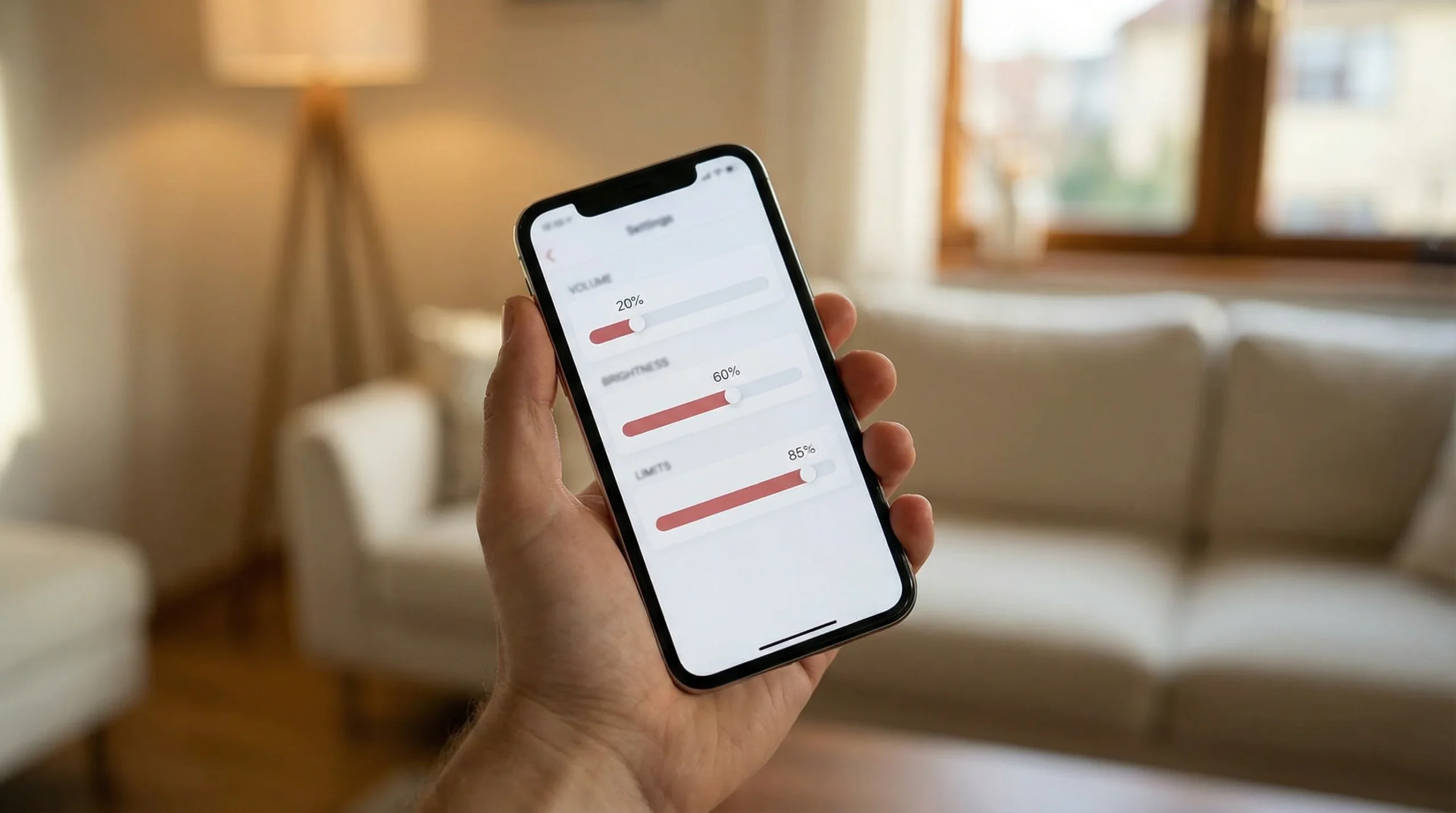
Deposit limits are not a sign of weakness — they are the most effective bankroll tool any casino offers. That statement is not motivational rhetoric. It is a reflection of how the tools function mechanically. A deposit limit, once set, creates a hard ceiling that the operator's system enforces automatically. You cannot override it in the moment, which is precisely when overriding it would do the most damage. Every other responsible gambling tool — session timers, reality checks, cool-off periods, self-exclusion — operates on the same principle: removing a decision from the moment of emotional or financial pressure and placing it in the hands of a system that does not care whether you are on a winning streak.
The UKGC has progressively strengthened the requirements around these tools. Since 31 October 2025, all remote operators must prompt new customers to set a financial limit either during registration or at the point of their first deposit. Operators must also remind existing customers at least every six months to review their limits and transaction history. From 30 June 2026, new rules will further standardise how deposit limits are defined: the term "deposit limit" will exclusively refer to a gross limit — the total amount paid into the account — eliminating confusion with net-spend-based limits that factor in withdrawals.
These are not optional features that progressive casinos offer as a goodwill gesture. They are licence conditions. An operator that fails to provide them, or makes them difficult to access, is in breach. If you cannot find responsible gambling tools within two clicks of any page on a casino site, that is not a design oversight — it is a compliance failure.
GAMSTOP: National Self-Exclusion for UK Gambling
GAMSTOP is the UK's free national self-exclusion scheme. Once registered, you are blocked from all UKGC-licensed online gambling sites for a minimum of six months, one year, or five years — your choice. Registration is free and takes about five minutes at gamstop.co.uk. The scheme is mandatory for all UKGC-licensed remote operators: they must participate, and they must block registered users. GAMSTOP does not cover land-based casinos or gambling sites licensed outside Great Britain.
Deposit Limits, Time-Outs and Reality Checks
Deposit limits come in three intervals: daily, weekly, and monthly. Setting all three creates layered control — a daily limit of £20 stops you chasing losses in a single session, a weekly limit of £50 prevents escalation, and a monthly limit aligns with a predefined entertainment budget. Decreases take effect immediately; increases are subject to a cooling-off period, typically 24 hours.
Time-out periods offer a broader pause. Most UK casinos allow breaks of 24 hours to 30 days, during which you cannot log in, deposit, or wager. Reality checks, meanwhile, are timed notifications that appear during play — how long you have been in session, how much you have spent. They are not as forceful as hard limits, but they interrupt the flow of play, which is the point.
GAMSTOP and When Self-Exclusion Makes Sense
GAMSTOP is the most powerful responsible gambling tool available to UK players, and it is designed for situations where individual casino controls are not enough. If you find yourself adjusting deposit limits upward, creating accounts at new casinos after self-excluding from others, or gambling more than you can comfortably afford despite your best intentions, GAMSTOP addresses the problem at scale — it blocks you from every UKGC-licensed online gambling site simultaneously.
Registration is straightforward. You visit gamstop.co.uk, provide your personal details (name, date of birth, email, address), and select an exclusion period: six months, one year, or five years. The exclusion takes effect within 24 hours. During the exclusion period, you should stop receiving direct marketing from licensed operators, and any attempt to register or log in will be blocked. It is not infallible — determined users have found workarounds — but it raises the barrier significantly and buys time, which is often what is needed most.
When the exclusion period ends, reinstatement is not automatic. You must actively request the removal of your GAMSTOP registration, and there is a further 24-hour waiting period before access is restored. This deliberate friction is intentional. It ensures that returning to gambling is a considered decision, not a default one. For players who want support beyond self-exclusion, organisations such as GamCare (0808 8020 133), BeGambleAware (begambleaware.org), and the National Gambling Treatment Service provide free, confidential help.
Red Flags: How to Spot an Unsafe Casino Before It's Too Late
If a casino offers a 500% match bonus with no visible licence — it is not generous, it is bait. The online gambling market includes a substantial fringe of unlicensed operators that target UK players through aggressive advertising, SEO manipulation, and social media promotions. These sites operate outside UKGC jurisdiction, which means no fund segregation, no audited games, no ADR process, and no recourse if they decide to withhold your winnings. Recognising them before you deposit is a skill worth developing.
The most reliable warning signs are not subtle. The absence of a UKGC licence number — or the presence of a licence from a jurisdiction with minimal oversight, such as Curaçao or Anjouan — is the clearest indicator. A Curaçao licence is not inherently worthless, but it does not offer UK players the protections they would receive from a UKGC-regulated operator: no mandatory responsible gambling tools, no financial vulnerability checks, no obligation to participate in GAMSTOP, and no enforceable dispute resolution mechanism accessible from Britain.
Other red flags are structural. Casinos that accept credit card deposits are either unlicensed or non-compliant — the UK credit card gambling ban has been in effect since 2020. Sites that lack visible terms and conditions, display no responsible gambling information, or make withdrawal conditions unreasonably difficult (endless pending periods, escalating document requests, unexplained account closures) are telling you through their behaviour what they will not say in their marketing. Trust the behaviour.
Warning: Common Scam Patterns
Unlicensed casinos frequently use these tactics: unsolicited bonus offers via email, SMS, or social media from sites you have never registered with; claims of "VIP" or "exclusive" status designed to bypass your usual verification instincts; withdrawal processes that require increasingly invasive documentation with no clear timeline; and customer support that becomes unreachable the moment you request a cashout. If a casino makes depositing easy and withdrawing difficult, the asymmetry is deliberate.
In the final quarter of 2025, the Gambling Commission reported the successful removal of over 200 unlicensed gambling URLs from UK search results. The Commission works with search engines and payment processors to disrupt illegal operators, but the volume of new sites means enforcement is an ongoing process rather than a one-off exercise.
FAQ: Safe Online Casino
How do I know if an online casino is safe to play at?
Start with the UKGC public register at gamblingcommission.gov.uk/public-register. Every legal online casino in Great Britain must hold an active remote operating licence — search by name or licence number and confirm the status reads "active." Beyond the licence, check for TLS encryption (the padlock in your browser), independent RNG testing seals from eCOGRA or iTech Labs, disclosure of the player fund protection level (basic, medium, or high), and the availability of responsible gambling tools including deposit limits, time-outs, and a link to GAMSTOP. A casino that meets all these criteria is operating within the UK's regulatory framework.
What are the new UK gambling regulations for 2025–2026?
The 2025–2026 period brought the most significant regulatory overhaul since the Gambling Act 2005. Key changes: a statutory gambling levy on operators (in force from April 2025, online operators pay 1.1% of gross gambling yield); online slot stake limits of £5 per spin for adults 25+ and £2 for ages 18–24; a 10x cap on bonus wagering requirements and a ban on mixed-product promotions (effective 19 January 2026); mandatory financial vulnerability checks at £150 net spend in a rolling 30-day period (since February 2025); mandatory deposit limit prompts for new customers (since October 2025); and standardisation of deposit limit definitions requiring gross deposit limits by 30 June 2026. Remote Gaming Duty is also set to increase to 40% from April 2026.
What happens if a UKGC-licensed casino refuses to pay out my winnings?
You have a structured process available. First, use the casino's internal complaints procedure — every licensed operator must have one and has eight weeks to resolve your complaint. If it remains unresolved, escalate to the casino's approved ADR provider (named in their terms and on the UKGC register). Common ADR bodies include IBAS, eCOGRA, and the Centre for Effective Dispute Resolution. If the casino has breached a licence condition, you can report the matter to the Gambling Commission directly — it investigates licence breaches and can take enforcement action, though it does not resolve individual disputes. Your fund protection in insolvency depends on the operator's tier: basic (no ring-fencing), medium (segregated but not guaranteed), or high (held in trust).
The House Doesn't Always Win — But You Need to Choose the Right One
Safety is not glamorous, and no one opens a casino account because the SSL certificate looked reassuring. Players come for the games, the thrill of a well-timed bet, the possibility of walking away with more than they started with. None of that changes because you spent five minutes checking a licence. What changes is the probability that the platform you are trusting with your money and data will treat both with the care the law requires.
The UK gambling market in 2026 is, by most measures, the most heavily regulated consumer gambling environment in the world. Stake limits, wagering caps, affordability checks, a statutory levy, mandatory deposit limit prompts — the cumulative weight of reform is substantial and designed to tilt the playing field towards the player. But regulation is a framework, not a personal bodyguard. It sets floors and builds guardrails. Navigating between them is still your responsibility.
Play at UKGC-licensed casinos. Verify the licence before you deposit. Understand the terms of any bonus you accept. Use responsible gambling tools — not because you think you need them, but because they are better at managing impulse than you are in the moment. And if something feels wrong, trust that instinct. There are enough licensed, regulated, independently audited casinos in the UK that you never need to settle for one that makes you uneasy. The house has a mathematical edge — that is how casino economics work. But it does not always win the trust of its players, and it does not always deserve to. Your job is to make sure the one you choose has earned it.