
Live Casino Lightning Roulette in the UK
 Available in GB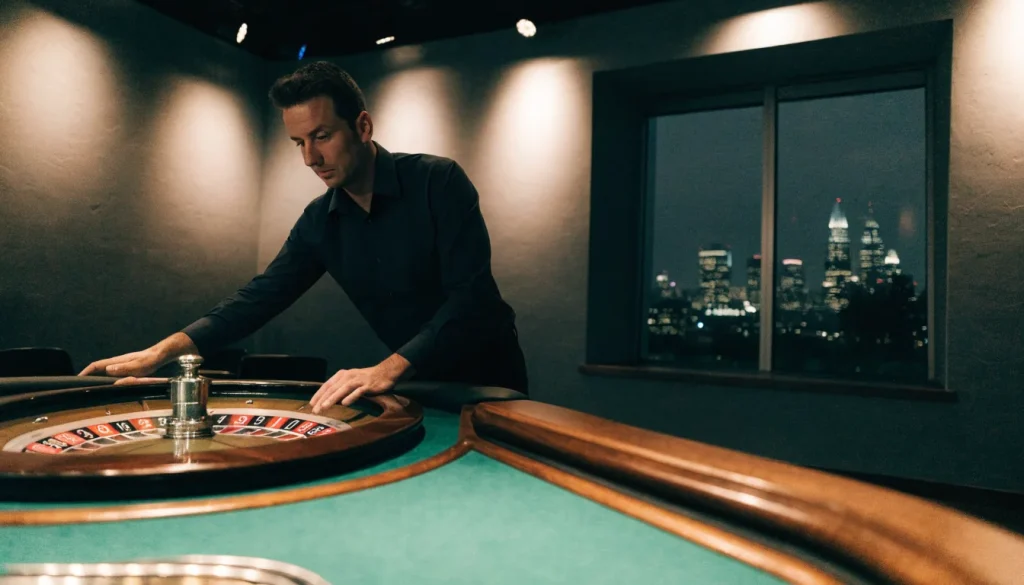
The guide explains lobby placement, first-person play, demo versus cash games, and the role of dealers and cameras.
Where Lightning Roulette Sits in the UK Live-Casino Lobby
Lightning Roulette belongs to the part of an online casino lobby that tries to preserve the atmosphere of a physical gaming room. Instead of presenting a purely digital game built from graphics and programmed animation, the live-casino format places a real table at the centre of the experience. A dealer conducts the round, the wheel becomes the visible object of attention, and the surrounding interface carries the practical work of displaying the game to people who are not in the room.
That distinction matters because “roulette” can describe several rather different products. A conventional online roulette game may be entirely automated, with software handling the wheel and presenting the result through a compact digital interface. A live roulette table, by contrast, borrows its meaning from the casino floor: the wheel, the croupier and the ceremonial rhythm of the round are part of the attraction. Lightning Roulette occupies that live-table space while giving the familiar roulette name a more dramatic presentation.
In a United Kingdom casino lobby, it sits alongside other live offerings rather than in a separate universe. Card games are natural neighbours. Blackjack has long been one of the recognisable table games in the casino tradition, while poker-based tables appeal to a different idea of competition and skill. Some lobbies also group together game-show-style products and wheel-based titles, creating a bright, noisy corner beside the more formal tables. The result is less like a catalogue of identical games than a small town with districts: roulette here, cards there, spectacle somewhere in between.
The live-casino category itself is not a novelty created by the latest interface. Grosvenor unveiled its live casino games in 2013, with a range that included Blackjack, Texas Hold’em and Roulette. That early selection is revealing. It tied online casino culture to the old physical repertoire rather than attempting to replace it with entirely new inventions. The camera and the connection changed the room’s boundaries; the table games supplied its vocabulary.
Casino Games: Slots, Live Tables and Online Formats
Lightning Roulette is therefore best understood as a recognisable roulette table with a particular branded identity, not as a synonym for every live roulette product. The word “Lightning” marks it out within the broader category. It gives the title a sense of movement and spectacle, even before the table is opened. That is useful in a crowded lobby, where a player may be choosing between several games that share the same basic family resemblance.
The surrounding lobby also shapes how the game is perceived. A tile placed beside blackjack feels different from the same tile surrounded by game shows and animated wheels. Names, images and categories do quiet editorial work: they tell the visitor whether a title belongs to traditional table play, a more theatrical format, or a software-led casino section. Live roulette can consequently feel closer to a broadcast programme than to a spreadsheet of outcomes. The old casino has acquired a camera crew.
For anyone looking at live casino Lightning Roulette in the UK, the useful starting point is this position within the lobby. It is a live roulette product, connected to the older table-game tradition but presented for an online audience. It should not be confused with the entire live-casino category, with automated roulette, or with every casino that happens to use the word roulette in its menu. The name identifies one destination inside a much larger room.
Recommended online casinos
- ChanzeBonus: Slots Welcome Bonus #1 200% up to €500 · Payout speed: 1-3 business days
- AmunbetBonus: Join now and get 450% up to 2,700 GBP + 450 FS · Payout speed: 1-3 business days
- DieselwinBonus: Welcome Pack 250% up to £4000 + 200 FS · Payout speed: 1-3 business days
- SlotoSportBonus: 500% up to £ 10 200+ 777 FS · Payout speed: 1-3 business days
- ZombillionBonus: Welcome Pack 250% up to £4000 + 200 FS · Payout speed: 1-3 business days
- NightLuckBonus: Welcome Pack + 805% Up To 6400€ + 280 FS · Payout speed: 1-3 business days
- EvoSpinBonus: 125% up to €2500 + 125 Free Spins · Payout speed: 1-3 business days
- Revery PlayBonus: 100% up to€1,000+ 100 FS · Payout speed: 1-3 business days
- JetsetspinsBonus: 200% Bonus + 100 Free Spins + Free Royal Wheel · Payout speed: 1-3 business days
- x3betBonus: Welcome Pack 100% Up to £1.000 + 200 Free Spins · Payout speed: 1-3 business days
Finding Lightning Roulette in an Online Casino
An online casino can offer many live tables without offering Lightning Roulette. The two things are related, but they are not interchangeable. A lobby may contain live blackjack, roulette, game-show titles and other table products while this particular roulette variant is absent, temporarily unavailable or shown under a different section of the site.
Live Dream Catcher Casino in the UK: What to Check
That is why the casino’s own lobby is the useful place to begin. A general description, a review page or a promotional banner may point towards a game, but the lobby shows what the operator is presenting as available at that moment. The distinction is modest in appearance and important in practice. A title can exist in a casino’s wider catalogue without being open for play on the day it is being sought.
Start with the live-casino area
The first task is to reach the casino’s live section rather than the general game catalogue. Online casinos commonly divide their lobbies into broad categories, and Lightning Roulette belongs with live table games rather than ordinary roulette software. From there, the title may be visible among the tables or grouped through the casino’s search and filtering tools.
The wording used by a lobby is not always identical from one operator to another. One may display the complete product name; another may place it beneath a roulette, live games or featured tables heading. A search for “Lightning Roulette” is therefore more useful than scanning a page by eye, particularly where the lobby contains a large number of tiles.
A result should still be read as a current lobby entry, not as a permanent promise. Games can be reorganised, removed, restricted to particular jurisdictions or unavailable at a particular time. The practical question is simple: does the operator’s own British-facing lobby show the title as available, and does selecting it lead to the relevant live table?
What an offering actually means
When an online casino says that it offers Lightning Roulette, the statement may refer to access through a live-game supplier rather than to a table created by the casino itself. The casino is the place where the account and lobby are found; the live game may be supplied by another company. That arrangement is ordinary in online gambling and explains why the same product can appear in more than one casino lobby.
Online American Roulette Casinos in the UK: What to Check
It also explains why a broad “live casino” label proves very little. The label describes a department, not every title within it. Similarly, a page devoted to roulette does not necessarily contain every roulette product. Lightning Roulette needs to be identified by its own title or by an unmistakable entry in the operator’s catalogue.
The presence of a tile is a stronger indication than a passing mention elsewhere, but the table page remains the final point of orientation. It should identify the game clearly and show that the casino can open it for the account being used. If the title is visible only in a general article, an old promotion or a third-party directory, the casino has not yet demonstrated current availability in its own lobby.
Checking the British-facing lobby
The country matters because a casino may present different products to customers in different markets. A title shown on an international page may not appear after an account is set to Great Britain, and a casino’s mobile and desktop lobbies may organise the same catalogue differently. The relevant check is consequently the version of the casino intended for British customers, not an unconnected page found elsewhere.
The same caution applies to the spelling of the title. A casino can use shortened labels, category names or provider-led navigation. The absence of an exact phrase in a prominent banner does not necessarily settle the matter; the live roulette category and the lobby’s internal search are worth checking. If neither leads to the game, it should not be treated as available merely because the casino discusses live roulette in general.
This is a matter of locating, not ranking. A casino that displays Lightning Roulette has answered one narrow question: whether the title is being offered in its lobby. That does not by itself establish that the casino is preferable to another, nor does it say anything about account controls, service or complaint handling. Those are separate judgements.
Do
- Check the operator’s British-facing lobby
- Use the internal search for the exact product name
- Verify the availability in the current lobby
Don’t
- Assume availability based on a general article
- Rely on old promotions or third-party directories
- Treat a passing mention as a guarantee of play
The licence remains part of the basic check
Remote operators serving customers in Great Britain are required to hold the relevant Gambling Commission licence. The existence of a Lightning Roulette tile does not replace that check. Before depositing, the operator’s licence number should be verified on the UK Gambling Commission’s public register, rather than inferred from a logo, a footer or the game’s presence.
This does not require treating every casino catalogue as a mystery. It means keeping two observations separate: the lobby confirms what game the operator appears to offer, while the public register confirms whether the operator is authorised for the British market. One is a catalogue check; the other is a legal-status check.
Account access may also affect what is displayed. Age verification is required before an operator allows funds to be deposited into a gambling account, and an account may not show the same content before registration as it does after the relevant checks. The important point is not to force a conclusion from a promotional page. The live lobby attached to the intended account and market is the more relevant evidence.
Lightning Roulette can therefore be found through a sequence of small checks: open the live-casino area, search or filter for the title, open the game entry, confirm that it is available to the British account, and verify the operator’s licence before depositing. The process is less glamorous than a “best casino” label. It is also more precise.
Gamble only with money that can be afforded to lose.
The Licence Behind the Lobby
A live casino does not float above the law simply because its table is on a screen. In Great Britain, commercial gambling has a designated public authority: the UK Gambling Commission. Its remit includes online casinos, so a digital version of a casino game belongs to the same regulatory landscape as other remote gambling offered to people in England, Scotland and Wales.
French Roulette Online Casinos in the UK
That geographical wording matters. The Commission’s reach follows the consumer, not the building where the technology happens to sit. A studio, server or other key piece of equipment may be located elsewhere, yet remote gambling supplied to customers in Great Britain remains within the Commission’s regulatory field. Geography, in this arrangement, is less a hiding place than an administrative detail.
The UK Gambling Commission also has a broader role in the United Kingdom’s gambling system, including oversight of online casinos. For commercial gambling in Great Britain, however, it is the central and exclusive regulator. That makes the licensing question less decorative than the polished lobby around it. A game title can be familiar, a table can look impressively international, and a website can speak in the language of hospitality; none of those features identifies the authority responsible for the operator.
The framework separates the business from the people running it. The Commission grants operating licences to companies and other businesses conducting gambling activities. It also issues personal licences to individuals whose work in the industry falls within the relevant licensing requirements. One licence therefore describes the legal permission held by the enterprise, while the other concerns particular people involved in operating gambling commercially.
This division reflects an old regulatory instinct: control the institution, but do not let the individuals behind it disappear into the institution. The casino is not treated as an anonymous website with a payment page. There is a business expected to hold permission to operate, and there are people whose roles may require personal authorisation.
The UK Gambling Commission regulates gambling supplied to customers in Great Britain, regardless of where the technical infrastructure or live studio is located.
For remote casinos, the practical meaning is straightforward. The online setting does not create a separate, unregulated category merely because the customer sees a web page rather than a physical premises. Gambling supplied remotely to Great Britain falls under the Commission when it is offered commercially to consumers there. The location of the live studio or technical infrastructure does not replace that obligation.
The arrangement also explains why the phrase “UK online casino” can conceal a small geographical wrinkle. The UK Gambling Commission is described in relation to gambling activity across the United Kingdom, while the remote licensing rules relevant to commercial services are framed around Great Britain. Northern Ireland is not part of the territory governed by the Gambling Act 2005, so the legal map is not quite as tidy as the marketing language.
For Lightning Roulette, the important point is not the theatrical name of the table but the regulatory structure surrounding its online supply. The lobby is the visible layer. Behind it stands a licensing system assigning responsibility to businesses, individuals and the authority that supervises commercial gambling in Great Britain.
Choosing a Casino Without Pretending There Is a Definitive Winner
A casino offering Lightning Roulette is not automatically the right casino for every player. The word “best” suggests a settled ranking, yet the meaningful choice is more practical: whether the operator is identifiable, licensed for the British market and equipped to handle ordinary account problems without turning them into a small administrative epic.
The first check belongs on the Gambling Commission’s public register. The operator’s legal identity, trading name and licence number should correspond with the details shown on its website. The licence number should be verified before any deposit is made. Remote operators serving consumers in Great Britain are required to hold the relevant Commission licence; a logo placed in a footer is not a substitute for checking the register.
The casino’s account arrangements deserve equal attention. Age verification must take place before a customer is allowed to deposit funds, so this process is part of the protection rather than an inconvenience added afterwards. New customers must also be prompted to set a financial limit before their first deposit, with accessible controls for changing account-level limits. A casino that makes these tools difficult to find is offering a revealing picture of its priorities.
Online Bingo in the UK: Rooms, Slots and Rules
Payment rules provide another useful test. UK-licensed casinos cannot accept credit cards for gambling, and credit-card funding routed through a money service business is also excluded. Wallets cannot be used where their funds originate from a credit card for gambling. These restrictions may make a payment page look less accommodating. That is rather the point.
Complaints information should be visible before trouble begins. A UK Gambling Commission licensee must provide an internal complaints process and access to an approved Alternative Dispute Resolution service. The route should be clear enough to locate without interpreting the site as though it were a legal document. Responsible-gambling facilities should be present too, including self-exclusion, with GAMSTOP available as a wider self-exclusion option for participating licensed operators.
These checks do not establish a universal winner among casinos carrying Lightning Roulette. They establish whether a particular operator meets the basic conditions expected in the British market and whether its account structure leaves room for control when enthusiasm becomes less entertaining. Any gambling decision should stay within money that can be afforded to lose. That is the useful standard.
What “First Person” Means at the Table
“First person” describes the viewpoint from which a live casino table is presented. Instead of watching the action as though seated somewhere across the room, the player is given a more immediate place within the scene: the table appears to unfold from the participant’s position, with the dealer and the game occupying the visible field.
That is the central idea behind first person Lightning Roulette. It concerns presentation, not a separate version of roulette. The name does not establish a different wheel, a different dealer, or a different set of outcomes. It signals a way of looking at the table.
The distinction matters because casino language often turns a viewpoint into a product label. A first-person live casino game may be described as though it were a new category, when the meaningful change lies in how the table is experienced on screen. The atmosphere is brought closer; the underlying identity of the game is not thereby transformed.
Online casino without ID in the UK: what it means
A viewpoint, not a promise of features
The phrase can cover different forms of visual presentation. It may refer to a camera position that places the table in front of the player, or to an interface arranged to suggest that position. It should not automatically be taken as a promise of particular controls, camera movements, overlays or personalisation. Those details belong to the individual game presentation and the platform delivering it.
This is where expectations can become unnecessarily elaborate. A person looking for a first-person Lightning Roulette casino game may be seeking immersion rather than another set of rules. The useful question is therefore not whether the label sounds technologically impressive, but whether the displayed table provides the kind of viewpoint intended. Marketing copy is a poor substitute for seeing how the game is actually presented.
The same caution applies to the wording “play first person Lightning Roulette”. It describes participation in a live table from that visual perspective; it does not mean that the player becomes the dealer, controls the wheel, or changes the course of the round. First person is about position and perception. The wheel remains the wheel.
Why the perspective changes the mood
Live casino games borrow much of their character from physical rooms. A dealer, a table and the visible sequence of events make the activity feel less like operating a solitary piece of software and more like joining an established ritual. A first-person presentation brings that imagined seat closer to the screen.
There is a social idea hidden in the terminology. “First person” places the participant at the centre of the scene, while the older broadcast-style view makes the participant more obviously an observer. Neither viewpoint proves that one is more authentic. One may feel intimate; the other may make the whole table easier to survey. The preference is aesthetic, almost theatrical.
It also remains a matter of interface rather than identity. A first-person Lightning Roulette casino in the UK is still an online casino product presented through a digital table. The label should not be read as evidence of a special status, a guaranteed format across every device, or a different relationship with the operator.
First person
A visual viewpoint in live casino games where the camera position and interface are arranged to suggest the player is seated directly at the table.
Whatever the viewpoint, the financial boundary remains real. Gambling should be limited to money that can be afforded to lose, and the presentation should never disguise that fact. A closer camera does not make a wager less consequential.
A nearer seat. Same stakes.
Playing the Game, and the Limits That Do Not Apply
Lightning Roulette is still roulette, even when the table is dressed in the language of spectacle. A wheel turns, a ball settles, and the outcome is determined by its numbered pocket. The “Lightning” element changes the presentation and the way certain winning numbers may be highlighted; it does not turn the game into an online slot.
That distinction matters in the United Kingdom because the rules do not place every casino game in one regulatory basket. Roulette belongs to the table-game category, alongside blackjack, rather than to the online-slots category. A person looking to play Lightning Roulette online is therefore dealing with a roulette game delivered through a live or digital casino interface, not with a slot spin carrying the slot-specific stake ceiling.
A specialist review has described the Great Britain limits for online slots as £5 per game cycle for customers aged 25 and over, and £2 for those aged 18 to 24. Those figures concern slots only. The same type of source notes that the limits do not extend to roulette or blackjack. It is an important qualification, not a small footnote: moving from a slot lobby to a roulette table does not mean that the slot rule has simply followed along in disguise.
Highest-RTP Slots in the UK: How to Read RTP
What playing involves
The basic act is familiar. A wager is placed on the roulette layout, the table closes for that round, and the wheel produces the result. In a live online version, the game is presented as a remote table rather than as a traditional casino visit. The practical experience depends on the operator’s interface and the table’s presentation, but the central object remains the wheel.
Lightning Roulette may make particular outcomes more visually prominent, yet prominence is not the same as certainty. A highlighted number can attract attention without changing the fact that roulette remains a game of chance. The theatrical layer is part of the product; it is not a prediction system.
This is also why comparisons with slots can become misleading. Slot regulation includes a specific cap on the amount that may be staked in a single game cycle: the figure is £2 for adults aged 18 to 24 and £5 for adults aged 25 and over. Those limits are attached to online slots, and do not govern roulette or blackjack. They should not be presented as a general maximum for every wager made at a UK online casino.
The absence of that particular slot limit is not an invitation to treat roulette as consequence-free. A casino account still concerns real money, and a round can produce a loss as readily as a win. The sensible boundary is personal rather than decorative: only money that can be afforded to lose should be used for gambling.
The surrounding account rules
Playing Lightning Roulette through a UK-facing online casino also takes place within the ordinary safeguards applied to remote gambling. The operator must verify age before allowing funds to be deposited, so an account is not simply an anonymous doorway to the table. New customers must be prompted to set a financial limit before the first deposit, with account-level controls available afterwards.
Attention UK-licensed casinos cannot accept credit cards for gambling, nor can they accept credit-card funded payments via money service businesses or certain wallets.
Credit cards cannot be used for gambling at UK-licensed casinos. That restriction also reaches credit-card funding routed through a money service business, and wallets cannot be used where their funds come from a credit card for gambling. The payment method is therefore part of the structure around the game, not a neutral detail hidden behind the cashier button.
Responsible-gambling tools matter here because roulette’s pace can make separate decisions feel like one continuous evening. UKGC-licensed casinos must provide measures including self-exclusion, while operators must maintain an internal complaints process and access to an approved Alternative Dispute Resolution service. These arrangements do not alter the wheel’s result. They do, however, place limits around the account from which the game is accessed.
Lightning Roulette is therefore best understood on its own terms: a roulette table with a heightened presentation, played through a remote casino account, and not subject to the online-slot stake ceilings described above. The distinction is technical, but money is often lost through technical distinctions.
A Demo Is Not the Same as a Cash Game
A request to try a Lightning Roulette demo has a different purpose from a request to play the game for money. The first is about examining the format without putting a deposit at risk; the second involves an account, a financial transaction and the consequences that come with real-money gambling. Treating the two as interchangeable makes a small word conceal a fairly large difference.
A demo may reproduce the appearance of a live table, but that does not establish how a cash version works at a particular casino. Availability, access conditions and the relationship between the demonstration and the live game can vary. A page presenting a “play” button may lead to an account area, a promotional explanation or a real-money table rather than a free version. The label is not a contract.
Nor should the presence of a demo be read as evidence that the same operator currently offers Lightning Roulette for cash. Products move between lobbies, become unavailable in particular jurisdictions or appear under a provider’s wider live-casino catalogue. The casino’s own lobby remains the place to distinguish a playable cash table from a description of one.
Online casino tournaments in the UK: what to verify
There is also a difference in what each format can tell. A demonstration can familiarise a person with the table’s broad presentation and the sequence of a round. It cannot turn an uncertain money decision into a certain one, and it says nothing about whether a person will find the real-money version comfortable or affordable. A simulated round has no financial result; a cash wager does.
For a UK player, real-money access belongs to the licensed gambling environment. Age must be verified before funds can be deposited, and a licensed operator must provide account-level financial controls, including a prompt for a new customer to set a limit before the first deposit. Those safeguards belong to the cash account, not to the idea of a free trial.
The sensible distinction is therefore plain: a demo, where available, is a way to inspect a game; a cash table is gambling. The latter should be approached only through an operator whose licence number has been checked on the UK Gambling Commission’s public register. Any wager should be limited to money that can be afforded to lose. A free round is not a rehearsal for losing money, and a cash round is not merely a more vivid demo.
The Dealer, the Camera and the Older Live-Casino Tradition
A live-dealer casino is built around a visible table rather than an animated graphic alone. The dealer occupies the centre of the scene, while a camera carries the table into the online setting. That arrangement gives the game a social shape, even when the people watching it remain strangers to one another. The screen becomes a small theatre: a professional routine, a wheel, cards, pauses, and the quiet ceremony of each round.
Lightning Roulette belongs to this dealer-led tradition. Its appeal is not simply the word “live”, nor the presence of a roulette wheel in a digital lobby. It is the sense that the game is being conducted at a table, with a human dealer acting as the recognisable figure between the player and the equipment. The camera makes that figure visible. It also preserves something older than online gambling: the idea that a casino game is an event staged for an audience.
That tradition did not begin with roulette’s appearance on a website. Grosvenor unveiled its live-casino games in 2013, introducing a selection of card and casino tables that included Blackjack, Texas Hold’em and Roulette. The choice is revealing. Live casino was presented not as a single novelty but as an extension of the established table-game culture, transferred into a broadcast environment.
The dealer therefore matters for more than decoration. A live table has a rhythm, and the camera gives that rhythm a public face. The result sits somewhere between a private wager and a televised performance. Casino history has always enjoyed that ambiguity.
For a UK player considering a live-dealer version of Lightning Roulette, the practical distinction is between the game’s presentation and the venue offering it. The presence of a dealer on screen does not by itself settle whether a particular table is available or whether the operator is suitable. A current UK Gambling Commission operating licence should be checked on the public register before depositing, alongside the account controls and complaints arrangements provided by the casino.
Gambling should remain limited to money that can be afforded to lose. The glamour is borrowed; the consequences are not.
When “Online Casino with Lightning Roulette” Is a Search, Not a Guarantee
A phrase such as “online casino with Lightning Roulette” sounds more definite than it is. It names a desired combination: an online casino, a particular live game, and the expectation that the two are available together in the United Kingdom. Yet a result displayed in a browser is only a signpost. It is not the casino lobby, not a current game listing and not evidence that an account can be used for real-money play.
That distinction matters because gambling pages are read quickly. A title may mention Lightning Roulette while the page itself discusses live casino games in general. A description may have been written for a wider market, where the same operator presents different products. A promotional page may remain visible after the game has been removed, relocated or made unavailable to a particular customer. The wording can survive the thing it describes. Text is remarkably good at outliving its subject.
The useful question is therefore not whether a casino’s name appears beside Lightning Roulette somewhere online. It is whether the game can be found through the operator’s own current service, under the conditions that apply to a customer in Great Britain.
Is a demo the same as a cash game?
No. A demo is for examining the format without financial risk, whereas a cash game involves real money, deposits, and regulatory safeguards.
Does “Lightning” change the rules of roulette?
No. It is a branded presentation that adds spectacle and movement, but the game remains a roulette table with a wheel and numbered pockets.
What a listing can and cannot establish
A third-party page, advert or search result can indicate that an operator has been associated with the game. It cannot, by itself, establish all the details that matter before money is involved. It may not show whether the game is currently offered, whether it appears in the British version of the lobby, or whether the page refers to a product with a similar name.
Even an operator’s own website needs to be read in context. A home page can mention a broad casino catalogue without displaying every game. A guide can describe a provider’s portfolio rather than promise that each title is available at that particular casino. A page may also lead to a registration screen instead of the actual game area, leaving availability to be confirmed after the account has been created.
The proper evidence is narrower and less theatrical: the casino’s own lobby should display Lightning Roulette as an available product for the relevant jurisdiction and account type. If the title cannot be located there, an old description should not be treated as a substitute. A search result is an invitation to investigate, not a receipt for something already found.
Why the words “UK” change the question
Adding “UK” to a description does more than identify geography. It raises a regulatory question about the service being offered to customers in Great Britain. Remote operators serving that market are required to hold the relevant Gambling Commission licence. The location of the operator or its technical equipment does not remove that requirement.
That is why the operator’s identity should be established before the game becomes the centre of attention. Brand names, company names and web addresses are not interchangeable merely because they appear together on a page. The licence should be checked against the UK Gambling Commission’s public register, using the operator details that actually identify the service. This check belongs before depositing, not after a payment problem or a missing game has turned a small uncertainty into a formal complaint.
A site can present itself as an online casino while the regulatory position remains unclear. It can also use a familiar product name in material that does not prove the product is supplied under a British-facing operation. The register is not decorative legal furniture. It is the point at which a commercial promise can be compared with the regulator’s record.
A sober route from description to availability
The gap between a description and a playable game can be handled without treating every page as suspicious. A careful sequence is enough:
- Identify the operator behind the page, rather than relying on the brand name alone.
- Check that operator on the Gambling Commission public register before depositing.
- Open the operator’s own casino lobby and look for Lightning Roulette in the relevant live-casino area.
- Confirm that the displayed service is intended for customers in Great Britain, not merely a general international page.
- Read the account information and available controls before funding an account.
The last step is not an attempt to turn a game search into a sermon. Remote operators must verify a customer’s age before allowing deposits, prompt new customers to set a financial limit before the first deposit, and provide account-level limit controls. Credit cards cannot be used for gambling at UK-licensed casinos. These are practical conditions of the account, not footnotes to be discovered once enthusiasm has done the choosing.
Availability still does not make a wager sensible. Lightning Roulette remains gambling, and money should be used only where its loss can be afforded. That warning is less glamorous than a bright game tile, but it has the advantage of remaining true after the page has changed.
A current lobby, a matching licence record and clear account controls provide a firmer basis than a promising phrase attached to an old page. The title may lead towards Lightning Roulette. Only the operator’s present service can show whether the destination exists.
Are online casino games licensed and regulated?
Yes. The UK Gambling Commission regulates online gambling offered to consumers in Great Britain, and remote operators serving them must hold the relevant licence.
What are the online slot stake limits in Great Britain?
The limit is £5 per game cycle for adults aged 25 and over, and £2 for adults aged 18 to 24. These limits do not apply to roulette or blackjack.
Is LuckyPays licensed by the UK Gambling Commission?
The Gambling Commission’s public register dated 26 September 2026 does not show an entry for LuckyPays or its stated domain, luckypays.io.