
Casinos That Accept Mastercard in the UK
 Available in GB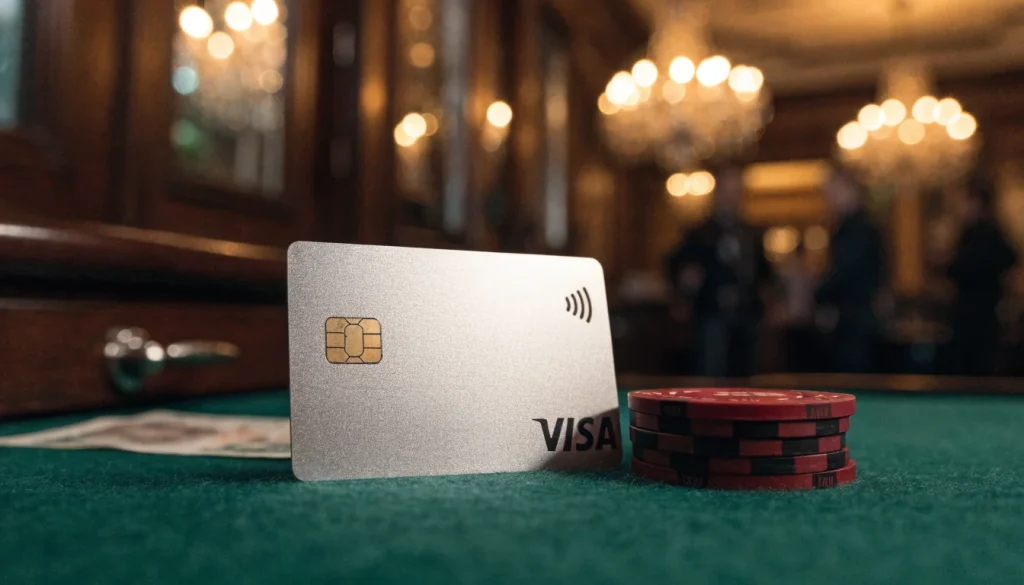
Mastercard branding does not guarantee acceptance: UK casinos distinguish eligible debit cards from other card products and payment routes.
Where Mastercard Fits in the UK Casino Cashier
Mastercard occupies a familiar place in the British casino cashier, but its presence is less simple than a logo on a payment page might suggest. UK casinos commonly accept debit cards bearing the Mastercard or Visa mark. That makes Mastercard a recognised payment route, not a guarantee that every Mastercard product will be accepted by every remote gambling licensee.
The distinction matters because a payment brand is not the same thing as a payment product. A cashier may display Mastercard while the account behind the card is subject to conditions that affect eligibility. The relevant question is therefore not merely whether a casino accepts Mastercard, but whether the particular card presented is an eligible debit card for gambling deposits in the United Kingdom.
A specialist casino review may list Mastercard among the methods shown by a site. Such a description can be useful as an indication of the cashier’s general arrangements, but it cannot settle the position for every customer or every moment. Payment availability changes, and the cashier remains the practical point at which the current combination of casino, account and card is tested.
That is why phrases such as “all Mastercard casinos in the UK” promise more certainty than the market can sensibly provide. There is no permanent class of casinos whose Mastercard status can be assumed from a brand list alone. A site may mention Mastercard in its payment information while a particular card product is not eligible, or while the available method differs according to the account. The small payment panel is less glamorous than a casino homepage, but it has the more useful opinion.
Mastercard is a network, not a permission slip
The Mastercard name identifies the card network. It does not, by itself, reveal whether the card is debit or credit, whether the issuer permits the transaction, or whether the gambling operator can lawfully accept it. Those are separate questions.
Casinos That Accept MiFinity in the UK: Payment Guide
For British gambling, the debit-card part of that distinction is central. Mastercard debit cards are among the card types commonly accepted by UK casinos, subject to the individual cashier and the card’s eligibility. The word “debit” does real work here: it indicates that the transaction draws on funds held in the associated bank account rather than extending a credit facility for the gambling payment.
The credit-card position is different and is fixed by regulation rather than by casino preference. The regulator banned credit-card gambling on 14 April 2020, and that restriction has not been relaxed. UK-licensed casinos cannot accept credit-card payments for gambling. A Mastercard credit card therefore cannot become acceptable merely because the cashier displays a Mastercard symbol.
This also prevents a convenient relabelling of the same transaction. Calling a payment a Mastercard deposit does not remove the need to identify the underlying card product. A credit card remains a credit card whether its network mark is Mastercard or another brand. The payment route has to comply with the rule, not simply resemble an accepted logo.
What the cashier can establish
The cashier is where general acceptance becomes an account-specific answer. A casino may be described as accepting Mastercard, while the live deposit screen determines whether the relevant method is enabled at that time. The current UK availability of Mastercard and the eligibility of the card product both need to be checked there.
This is particularly important for anyone comparing sites described as accepting Mastercard deposits. A list of “best Mastercard casinos” may sound like a settled ranking, yet the payment question is more modest and more concrete: is a permitted Mastercard debit card available for the account, and does the operator present it as an active deposit method? A bonus, a collection of games or the novelty of a new site does not answer that question.
The same principle applies to descriptions of Mastercard casinos intended for mobile or Android use. The device may change the appearance of the cashier, but it does not turn an ineligible card into an eligible one. Mastercard acceptance is determined by the payment arrangement and the account, not by the enthusiasm of a marketing label.
Visa and Mastercard may both appear among the listed methods, yet each transaction still depends on the card presented and the operator’s current arrangements.
A casino can also have several card brands in its cashier without treating them as interchangeable in every operational respect. Visa and Mastercard may both appear among the listed methods, yet each transaction still depends on the card presented and the operator’s current arrangements. A logo is an invitation to inspect the route, not evidence that every version of it is open.
Reading claims about Mastercard deposits
Descriptions of “casinos that accept Mastercard in the UK” are therefore best understood as descriptions of a payment category. They indicate that Mastercard debit cards belong to the card methods commonly found in British casino cashiers. They do not establish universal acceptance, promise that every card will work, or override the prohibition on credit-card gambling.
The sensible order is plain:
- Identify the card product as debit rather than credit.
- Confirm that the casino’s current cashier shows Mastercard as an available method.
- Check that the transaction is being made through the permitted card route.
This is not needless bureaucracy. Gambling regulation in Britain has made the source of the funds part of the payment question. A card carrying the right network mark can still be the wrong instrument for the transaction.
Mastercard’s role is consequently neither mysterious nor unlimited. It is a widely recognised card network with a place among UK casino deposit methods, particularly through eligible debit cards. Its acceptance remains specific to the operator, the account and the card product at the time of payment. The credit-card boundary sits above all of those details, unchanged since April 2020. Familiar logo, narrower permission.
Recommended online casinos
- ChanzeBonus: Slots Welcome Bonus #1 200% up to €500 · Payout speed: 1-3 business days
- AmunbetBonus: Join now and get 450% up to 2,700 GBP + 450 FS · Payout speed: 1-3 business days
- DieselwinBonus: Welcome Pack 250% up to £4000 + 200 FS · Payout speed: 1-3 business days
- SlotoSportBonus: 500% up to £ 10 200+ 777 FS · Payout speed: 1-3 business days
- ZombillionBonus: Welcome Pack 250% up to £4000 + 200 FS · Payout speed: 1-3 business days
- NightLuckBonus: Welcome Pack + 805% Up To 6400€ + 280 FS · Payout speed: 1-3 business days
- EvoSpinBonus: 125% up to €2500 + 125 Free Spins · Payout speed: 1-3 business days
- Revery PlayBonus: 100% up to€1,000+ 100 FS · Payout speed: 1-3 business days
- JetsetspinsBonus: 200% Bonus + 100 Free Spins + Free Royal Wheel · Payout speed: 1-3 business days
- x3betBonus: Welcome Pack 100% Up to £1.000 + 200 Free Spins · Payout speed: 1-3 business days
When a Card Is Not the Only Route
Mastercard is only one door into a casino cashier. In Britain, the alternatives matter because they do not all perform the same job. Some move money directly from a bank account, some place a voucher between the bank and the gambling account, and some keep funds inside an electronic wallet. The label “alternative” therefore conceals several quite different arrangements.
Payments at UK Casinos: Compare Deposit Methods
Open banking and bank transfers
Open banking connects the casino cashier with a bank account through an authorised payment service. Instead of entering card details, the account holder approves a payment through the banking interface. The money travels from the bank account to the gambling account, while the casino receives the payment confirmation through the service handling the connection.
A bank transfer is more familiar and less theatrical. It sends funds from a bank account using the details supplied by the remote gambling licensee. The cashier may provide a reference so that the payment can be matched to the correct account. That reference is not decorative: a transfer without the required information can create an avoidable reconciliation problem.
A specialist review reports that open banking and bank transfers may support instant deposits and fast withdrawals at many sites. That is a description of the services covered by that review, not a permanent property of every cashier. Availability, the payment provider and the operator’s own processing arrangements still decide what happens in a particular account.
These methods can appeal to people who prefer a direct connection with their bank rather than a card network or a separate wallet. They also leave the account holder dealing with a recognisable financial institution, which can make the route feel less like a trip through a corridor of payment brands. The corridor is still there; it simply has better lighting.
Bank transfer is not automatically interchangeable with open banking. A casino may display one and not the other, or may offer both through different providers. The cashier is the place where that distinction becomes visible. It shows which route is available for the account and, where relevant, whether the same route can be used when funds are later withdrawn.
Alternative Methods
In Britain, several alternatives to Mastercard exist, including open banking, bank transfers, prepaid vouchers like Paysafecard, and electronic wallets such as Skrill, Neteller, and PayPal.
These methods differ in how they move money, whether they allow withdrawals, and how they interact with casino promotions.
Prepaid vouchers
Paysafecard takes a different approach. It is a prepaid voucher rather than a direct bank-payment route. Funds are loaded onto the voucher before the casino deposit is made, and the voucher details are then entered at the cashier.
Its defining limitation is simple: Paysafecard is deposit-only. It can put money into the gambling account, but it is not a route for receiving a payout. That makes the payment path one-way and means that another withdrawal arrangement must be available if funds are later requested.
The separation can be useful for people who do not want to disclose card or bank details to a casino cashier. It also creates a boundary that should be understood before the deposit is made. A payment method that works perfectly at the first stage is not necessarily suitable for the second. In the plainest terms, Paysafecard gets money in and stops there.
Electronic wallets
Skrill and Neteller hold funds in electronic wallets that can be used at some gambling sites. The casino cashier may ask for the wallet account to be selected and the payment to be approved within that service. The deposit then comes through the wallet rather than directly from a Mastercard or bank account.
Casinos That Accept USDC in the UK: What to Check
Both services are available at some sites, not everywhere. A specialist review characterises Skrill as one of the most common deposit methods at UK-friendly casino sites in 2026, but current availability remains a cashier-level matter. Payment pages change, providers come and go, and a name familiar from one operator’s list cannot be treated as a guarantee elsewhere.
Wallets also have a promotional complication. A specialist review says Skrill and Neteller are often excluded from promotions. That does not mean every offer excludes them, nor that every casino applies the same condition. It means that the payment route can affect whether a promotion is available, even when the deposit itself is accepted. The terms attached to a particular offer determine the result.
PayPal belongs to the same wider conversation, although it has its own position at each operator. A specialist review describes PayPal as valued for speed and convenience but notes that it may be left out of bonus eligibility. That observation concerns the offer attached to the payment route, not a universal rule for every casino.
Casinos That Accept Maestro in the UK: What to Check
The practical distinction is between acceptance and usefulness. A wallet may be accepted for deposits but have conditions attached to promotions. A voucher may be accepted for deposits but be deposit-only. A bank-based route may be available in the cashier while its timing depends on the service used. None of these routes can be judged by the payment logo alone.
Checking the route before depositing
The payment page should be read as a set of separate permissions rather than a gallery of familiar names. It should show whether the method is available for the account, whether it is intended for deposits, and whether the operator supports a corresponding withdrawal route. Paysafecard makes the danger of assuming both directions especially clear, while wallets and bank-based services may have their own conditions.
The same discipline applies when a casino advertises Mastercard alongside Visa, wallets or bank transfer. A logo indicates that a payment brand belongs to the cashier’s vocabulary; it does not settle every question about the particular card product, account or transaction. The payment screen remains the final checkpoint. A small amount of administrative reading, unfashionable but effective.
Casinos That Accept Zimpler in the UK: What to Check
Debit Deposits, Credit-Card Boundaries
A Mastercard logo does not tell the whole story. For a UK casino cashier, the important distinction is whether the card draws money from a bank account or from a credit facility. A Mastercard debit card is connected to the customer’s available funds. A Mastercard credit card is a borrowing instrument. The network symbol may look identical; the regulatory treatment is not.
UK casinos commonly accept debit cards, including Mastercard debit cards. That makes this card type a recognised route for casino deposits, although acceptance remains a matter for the individual cashier and the specific card product. A casino may display Mastercard among its payment methods while a particular debit card is declined, unavailable for a chosen account, or subject to checks by the card issuer. The badge is an invitation to inspect the details, not a guarantee carved in stone.
The position on credit cards is much firmer. Credit-card payments for gambling are not permitted at UK-licensed casinos. The prohibition took effect on 14 April 2020 and remains in place. A Mastercard credit card therefore cannot be used as a legitimate deposit card for a UK-licensed online casino, even though the same Mastercard brand is accepted when it appears on a debit card. The distinction is between the source of the funds, not the colour, design or payment network printed on the plastic.
Casinos That Accept AstroPay in the UK: What to Check
This also explains why searches for casinos accepting Mastercard can produce a misleadingly simple answer. “Mastercard accepted” may mean Mastercard debit cards only. The cashier’s wording, the card type selected during payment and the issuer’s response all matter. A failed transaction is not necessarily evidence that Mastercard has disappeared from UK casino banking; it may indicate that the card is credit-based or that the particular product is not eligible.
The same boundary applies to offers attached to card deposits. A page may describe a Mastercard casino promotion, free spins or a real-money offer, but promotional language cannot make an ineligible credit-card payment lawful. Nor does an advertised no-deposit offer turn a credit card into an acceptable funding method. The payment rule comes first; the offer, if one exists, comes after it. Marketing is inventive. Regulation is less so.
“Debit” also does not mean that every transaction will pass automatically. The card must be issued for a permitted use, the account details must correspond with the customer’s casino account, and the cashier must still show the method as available. Those are ordinary points of eligibility rather than a promise that every Mastercard debit card will work at every operator. Current availability is therefore established at the point of deposit, where the casino presents the payment methods it can actually process.
A Mastercard debit deposit is consequently a straightforward question of eligibility: is the card linked to funds already held in the account, and does the casino currently support it? A Mastercard credit deposit is a different question with a settled answer for UK-licensed gambling: it is not an allowed route. Treating the two as interchangeable because they share a payment network is the mistake that causes most confusion around online casinos accepting Mastercard debit cards.
The wording on a bank statement or card front may not settle the matter by itself. Some financial products combine features, use digital versions of physical cards, or sit behind a payment service. What matters is whether the gambling payment is funded through credit. UK operators cannot accept credit-card payments for gambling, so a Mastercard product with a credit basis cannot be made acceptable by passing it through a different-looking checkout screen.
Credit Card Ban
UK-licensed casinos cannot accept credit-card payments for gambling. This restriction has been in place since 14 April 2020.
For deposits, then, Mastercard remains relevant in Britain chiefly as a debit-card method. The card brand opens the door; the funding source decides whether the door can be used. A small distinction, with rather large consequences.
Mobile Slots and the Payment Screen
Mobile slots are often discussed as though the game and the payment method were one thing. They are not. The slot is the entertainment layer; the cashier is the financial layer, with its own list of available methods, account checks and product restrictions. A Mastercard may be displayed as an option for casino deposits, yet that does not establish that every Mastercard product can be used or that the method is currently enabled for a particular account.
On a phone, the cashier becomes especially important because the payment screen may be reached through a compact menu rather than a prominent desktop-style navigation bar. The relevant question is not whether a site mentions Mastercard somewhere in its payment information, but whether Mastercard appears as an available deposit method after the account has been opened and the mobile cashier has been loaded. A specialist review can list Visa and Mastercard among the payment methods associated with supplied sites, but current availability and card-product eligibility still need to be confirmed in the operator’s own cashier. Payment pages have a habit of being more current than promotional prose.
Casinos That Accept Upaycard in the UK
That check matters for anyone looking for online slots payable by Mastercard in the UK. The phrase describes a funding route, not a separate class of slot. Mastercard does not make a particular title a “Mastercard slot”, nor does a mobile screen turn a free-play mode into real-money play. The payment method belongs to the casino account and cashier, while the games remain subject to the operator’s mobile offering.
The same distinction applies when the cashier shows an alternative such as Apple Pay. Some UKGC-licensed casinos accept Apple Pay for deposits, so a mobile payment screen may present a choice beyond a physical card. Its presence should still be treated as a deposit option shown by that casino, not as evidence that every UK-licensed site supports it. Payment branding is not a national promise.
A sensible mobile check therefore has a narrow sequence:
- open the casino’s cashier rather than relying solely on a payment-method banner;
- see whether Mastercard is listed for the account and whether the card product is eligible;
- confirm the amount and currency before authorising the transaction;
- note whether Apple Pay is offered as a deposit method on that particular UKGC-licensed site;
- keep the payment details consistent with the casino account.
This is less glamorous than scrolling through slot tiles, but it is where the practical meaning of “pay by Mastercard” is settled. A mobile casino page can display a polished selection of games while the cashier offers a different set of routes. The screen decides.
Real-Money Play Under UK Slot Rules
Real-money slots in Britain sit inside an account-control system, not merely a payment screen. A Mastercard may be the route used to fund an account where the cashier accepts it, but the payment method does not determine whether the account is ready for gambling. Before money enters the balance, the account must pass through the controls required by the remote gambling framework.
The first important checkpoint comes before the first deposit. UK Gambling Commission rules require a remote gambling operator to prompt a new customer to set a financial limit at that stage. This applies whether the intended deposit is made by Mastercard, another bank card, an e-wallet or a different available route. The rule makes the limit part of account opening rather than an afterthought added once play has begun.
UK Gambling Commission rules require a remote gambling operator to prompt a new customer to set a financial limit during the account opening stage.
That order matters. A slot account is not simply a wallet with games attached to it. It is an account in which the operator must make financial controls available before real-money play starts. A payment card can move funds into the account; it does not replace the account-level safeguard.
Controls attached to the account
The same rules require accessible limit controls at account level. In practical terms, the control should belong to the gambling account itself, rather than existing only as a warning on the Mastercard deposit form. The relevant settings should therefore be findable through the account interface, alongside the ordinary account-management functions.
This distinction is useful when comparing descriptions of Mastercard slots sites or mobile slot services. A page that focuses only on whether Mastercard appears among the cashier icons says something about a transaction route. It says nothing, by itself, about the financial controls attached to the account. Those are separate questions, and the separation is deliberate.
The arrangement also changes the meaning of “real money”. It does not mean unrestricted access to a balance as soon as a card is accepted. It means play takes place within an account whose operator has obligations before the first deposit and throughout the account relationship. The payment instrument is visible; the control structure is quieter, but more important.
Casinos That Accept Wirecard in the UK
For customers aged 18 and over, real-money online gambling is legal where the remote gambling licensee holds a UK Gambling Commission licence. The licence framework places account protections around the transaction, including the requirement to prompt a new customer for a financial limit and to keep account-level controls accessible. Mastercard slots, in that setting, are not a separate legal category. They are slot play funded through a particular payment route and subject to the same account-control architecture.
The result is a modest but meaningful change in emphasis. The question is not only whether a cashier displays Mastercard or whether a mobile page loads a slot. It is whether the account is configured for controlled financial activity before the first deposit is made. A card opens the door. The account rules decide how the room is arranged.
Deposits, Payouts and the Return-to-Source Rule
A Mastercard deposit and a Mastercard payout are not mirror images. The deposit is an authorisation request: the casino’s cashier checks the available payment route, the card issuer approves the transaction, and the balance is credited. A card deposit can be instant. The withdrawal begins a different chain, with checks that do not arise in quite the same way when money is moving into the account.
UK anti-money laundering rules usually require a payout to return to the payment source used for the deposit. This is often called the return-to-source principle. It is intended to establish where the money came from and where it is going, rather than allowing a gambling account to become an anonymous crossroads for funds. The cleanest arrangement is therefore one named casino account, one matching Mastercard payment source and a withdrawal that follows the casino’s stated cashier process.
Return to Source
Attention UK anti-money laundering rules usually require a payout to return to the original payment source used for the deposit.
That does not necessarily mean a direct withdrawal to Mastercard will be available. The cashier may display Mastercard for deposits while applying its own payout procedure to the same card, or may request another route after the original deposit has been returned. Payment eligibility is product-specific and can change, so the withdrawal screen is more informative than a general payment logo.
The distinction matters particularly in searches for Mastercard casinos in the UK. UK-licensed casinos cannot accept credit-card payments for gambling, so a Mastercard deposit must not be treated as permission to use a Mastercard credit card. The relevant payment route is an eligible debit-card transaction, subject to the casino’s current cashier and the card issuer’s rules.
Why withdrawals take longer
A card deposit can be instant, whereas a payout may take several business days. A specialist review describes the difference in practical terms, but the precise timing remains dependent on the casino’s process. The withdrawal normally has to be requested, checked and approved before the payment provider can handle it. The casino’s internal approval is therefore part of the processing time, not an invisible step that begins only after approval.
First withdrawals can take longer while KYC is completed. The casino may need to establish that the account holder, payment method and requested payout belong together. If the original Mastercard deposit has not been fully matched to the account, or if additional verification is required, the payout can remain pending until those checks finish.
This is why “instant banking” language attached to a deposit should not be read as a promise of an instant withdrawal. Speed at the cashier describes the incoming transaction; it says little about approval, ownership checks or the return-to-source process on the way out. Payments have paperwork, even when the button looks effortless.
Interac at UK Casinos: Checking Payment Availability
Bonus Eligibility Depends on the Payment Route
A Mastercard deposit and a casino promotion are separate questions. A cashier may display Mastercard among its payment options while the welcome offer attaches only to selected routes, or to a qualifying deposit made under particular terms. That small distinction is easy to miss: the card opens the cashier, but it does not automatically open every bonus attached to it.
For slots sites that accept Mastercard deposits, the relevant wording is found in the promotion’s terms rather than in the card logo. A welcome bonus may require a deposit through an eligible method, while a “no deposit” offer may have its own registration or code conditions. The label alone does not establish that Mastercard qualifies. Payment method, account status and the promotion’s definition of an eligible transaction all matter.
This is why searches for Mastercard casino welcome bonuses, real-money slots offers and bonus codes can produce a misleadingly simple picture. The word “Mastercard” describes the route used to fund the account; it does not describe the operator’s promotion policy. A Mastercard slots bonus may be available at one casino and absent at another, even where both accept the same card network.
PayPal illustrates the awkwardness particularly well. A specialist review says that PayPal is valued for speed and convenience but may be left out of bonus eligibility. That is a statement about a changing promotion practice, not a permanent rule. The offer page and its terms remain decisive. A payment method can be practical for deposits while being unsuitable for claiming a particular reward.
Bonus Eligibility
Whether a Mastercard deposit qualifies for a welcome bonus or other promotions depends on the specific terms of the offer. Some casinos may exclude certain e-wallets or card-based transactions from promotional eligibility.
The same caution applies to Skrill and Neteller. They are offered at some sites, and a specialist review reports that promotions often exclude them. The exclusion may concern a welcome offer, a reload promotion or a specific bonus code rather than every promotion on the site. Treating one excluded route as evidence that the account can never receive an offer turns a condition into a myth.
The clean way to assess a Mastercard promotion is therefore textual: identify the eligible deposit methods, check whether the offer requires a code, and see whether the terms distinguish card payments from e-wallet transactions. “Deposit made” and “qualifying deposit” are not necessarily the same event. Casino wording has a talent for making that difference look decorative. It is not.
Minimum Deposits and Account Limits
The minimum deposit is a small figure with disproportionate influence over the cashier. A specialist review places the starting point for many UK casino deposits between £10 and £20, with the exact threshold determined by the selected payment method. That range should be treated as a guide to the offers described there, not as a permanent rule applying to every Mastercard casino.
This matters when a search for a £5 Mastercard deposit produces confident-looking lists. A £5 minimum cannot be assumed simply because a casino accepts Mastercard. The amount shown at the cashier is the operative figure, and it may differ between a card, an e-wallet, open banking and other routes. The method’s minimum is also separate from any financial limit attached to the account.
Why the cashier may show a different limit
Deposit ceilings can be set at several levels:
- per transaction;
- per day;
- per month.
The applicable maximum may vary with the payment method and the account’s status. A card cashier can therefore show a different permitted amount from a mobile payment route, while a newly created or not-yet-fully-assessed account may be subject to controls that do not apply in the same way later. The figures are not universal, and the relevant information belongs in the operator’s cashier or account controls rather than in a generic payment-method label.
A mobile screen does not create a separate financial regime. It may present the payment form more compactly, but the minimum and maximum still come from the casino, the chosen route and the account settings. “Instant deposit” describes the handling of a transaction, not permission to bypass a minimum or exceed a limit.
Financial limits before the first deposit
UKGC rules place a control at the beginning of the customer relationship: remote gambling licensees must prompt a new customer to set a financial limit before the first deposit. Account-level limit controls must remain accessible afterwards. These controls concern how much can be deposited and are distinct from the minimum required to open a transaction.
That distinction prevents two common errors. A low minimum does not mean that unlimited deposits are available, and a personal limit does not lower the casino’s stated minimum unless the cashier allows the resulting amount. The £10–£20 range is therefore a reference point, not a promise; the account screen decides.
Comparing the Cost of Payment Alternatives
The visible fee is only one part of the price of moving money to or from a casino account. A payment route can involve a charge from the casino, the payment provider, the card issuer or bank, and the network carrying the transaction. Currency conversion may add another layer, particularly where the casino account and the funding account use different currencies.
The total cost of a transaction can be affected by casino fees, provider charges, bank fees, and currency conversion spreads.
That makes a simple “cheapest method” label unreliable. A route with no stated casino fee can still cost more if the provider applies a conversion spread or the bank adds its own charge. A specialist review makes the same point: the exchange-rate spread can outweigh a flat fee that is easier to notice. The quiet cost is sometimes the larger one.
What to compare
For a Mastercard deposit, the relevant checks include any casino charge, the issuer’s treatment of the transaction, and the exchange rate applied if the account is not held in pounds sterling. Network costs may also form part of the final amount. The fact that a Mastercard option appears in a cashier does not, by itself, reveal the complete cost of using it.
The same comparison applies to alternatives. An e-wallet may have its own provider terms; a bank transfer may involve bank or currency costs; and another payment service may apply a network charge. These costs can differ between depositing and withdrawing, so a method that looks economical at the cashier may not have the same financial effect when funds leave the account.
The useful comparison is therefore tied to the actual transaction: the amount being moved, the account currency, the casino’s published charges, the provider’s fee schedule, the bank or issuer’s terms, and any exchange-rate spread. A specialist review advises checking those elements together rather than ranking payment methods in the abstract.
For British accounts, the supplied casino pages state that GBP is supported, but the account currency still needs confirmation before the first transaction. That small check can prevent an avoidable conversion. It is less glamorous than a “best alternative” badge, and considerably more useful.
Mastercard remains one possible route where the cashier lists the relevant card product, but its cost cannot be separated from the issuer, provider, network and currency terms attached to that particular transaction. Availability and price are different questions.
Casinos That Accept Tether in the UK
Payment Checks at Casinos Outside Gamstop
A casino described as being outside Gamstop sits outside the UK self-exclusion scheme, but that description says nothing by itself about Mastercard acceptance, payment safety or UK regulatory status. Offshore casinos operate outside the UK Gambling Commission system and do not hold a UKGC licence. That distinction matters: remote gambling operators selling into Great Britain must hold the relevant UK licence, while a player does not incur a fine or criminal prosecution merely for using an offshore casino.
Payment ownership becomes especially important when a site is outside the UK framework. The account name, registration details and Mastercard holder should belong to the same customer. Matching information removes a straightforward reason for a payment to be paused or questioned. It also makes the transaction easier to explain if the cashier requests evidence of ownership.
A deposit is not proof that a later payout will follow the same route without checks. Returning funds to the original payment source is a recognised anti-fraud and anti-money-laundering control. A different payout route can therefore trigger additional verification, particularly where the destination account is held by another person or where the payment trail is unclear. The cleanest arrangement is one named account used consistently for both sides of the transaction.
This does not mean that every casino outside Gamstop accepts Mastercard, or that a Mastercard deposit confirms eligibility for withdrawal. The cashier’s current payment options and the operator’s terms determine what is available. A specialist review may describe a Mastercard deposit route, but such descriptions can become outdated; the live cashier remains the relevant check.
Withdrawal timing is also not fixed by the card brand. A specialist review notes that speed depends on the casino’s internal approval process and on whether the account has been fully verified. A payment can therefore remain pending while identity or ownership information is examined.
The modest discipline of matching names and retaining transaction records can prevent an avoidable dispute. It cannot turn an offshore casino into a UKGC-licensed one.
Are Visa and Mastercard deposits definitely debit cards?
No. Visa and Mastercard identify the card network, not whether a card is debit or credit. UK casinos can accept eligible debit cards, but credit-card gambling is prohibited.
Do UK casino withdrawals require verification?
Often, particularly before a first withdrawal. Processing may take longer while verification is completed, and payouts usually return to the original payment source.
Why can a fast payout casino still delay my withdrawal?
A casino’s internal approval process and incomplete account verification can delay a payout, even when the payment method is usually fast. First withdrawals may take longer while verification is completed.
Can I deposit in GBP?
Yes, GBP is supported. Check your account currency before your first transaction to avoid conversion.
Are fast casino withdrawals guaranteed?
No. Withdrawal speed depends on the casino’s approval process and whether your account is fully verified; the payment method and, for bank transfers, cut-off times and weekends can also affect delivery.
Which payment methods are accepted in Great Britain?
Common options include Visa and Mastercard debit cards, PayPal, bank transfer and open banking. Some sites also offer Paysafecard, Skrill, Neteller or Apple Pay; availability varies by casino.