
Online Craps Casinos UK: What Can Be Verified
 Available in GB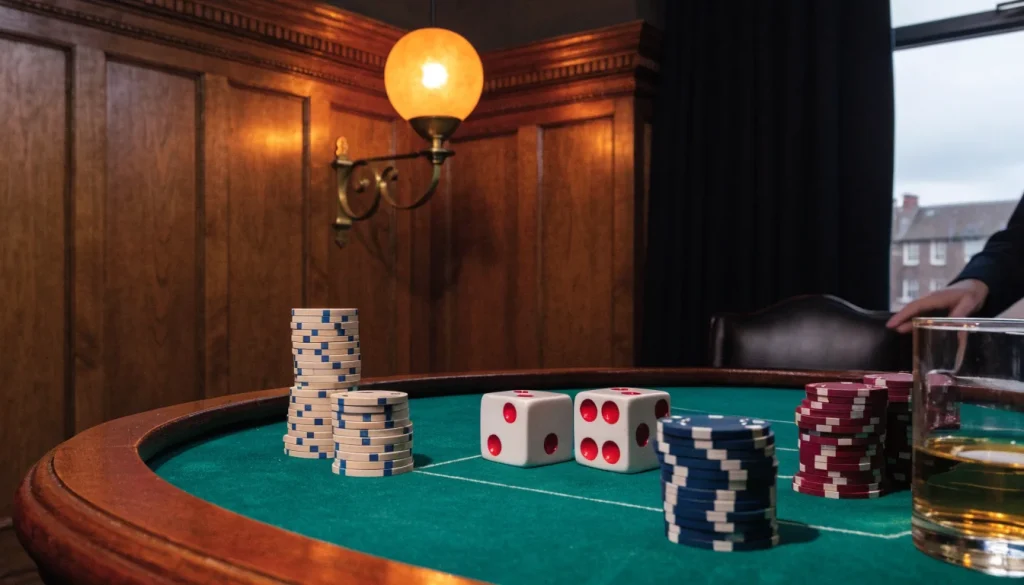
A practical guide to what licensing, game listings and available evidence can—and cannot—confirm about real-money craps in the UK.
Real-Money Craps and the Limits of What Can Be Verified
“Real money” changes the meaning of an online casino search. It is not merely a request for a game title or a colourful table on a website. It points to a complete arrangement: a player deposits funds, places wagers, receives winnings through an operator, and remains within the protections attached to that operator’s British licence. A casino game can be displayed in a lobby without establishing that this arrangement exists for craps.
Amatic Industries holds a UK Gambling Software licence, active since 27 April 2017, but that licence permits the Austrian supplier to provide games to operators. Amatic is not a consumer casino, does not accept bets from British players and does not handle player deposits or payouts. Those responsibilities belong to the operator hosting the game.
The licence therefore says something about the supplier’s ability to participate in the regulated software market. It does not say that Amatic offers craps, that any particular casino has placed craps in its lobby, or that a British player can stake money on such a table. A software licence is not a catalogue, and a catalogue is not a cashier.
Amatic’s online division, AMANET, supplies HTML5 games designed to run in a mobile browser. Its catalogue includes video slots and random-number-generator table games, while excluding live-dealer games. That description remains too broad to identify craps. A reference to table games does not turn every traditional casino game into a confirmed product. Nor does mobile delivery establish that a game is available at a particular UK operator.
EGT Casinos in the UK: Why Amatic Is Different
The same caution applies to lists of operators associated with Amatic titles. An operator may carry software from a provider without carrying every title in that provider’s catalogue. Even when a game appears in a general provider list, its presence does not prove that it is currently enabled for British customers, available for real-money play, or offered under the same conditions at every operator. Editorial lists are not entries in the Gambling Commission’s register.
This is why the phrase “online craps for real money in the UK” should not be treated as a licence to fill the blank with a familiar casino brand. A named operator needs a confirmed product, not merely a connection with casino software. Without that product-level confirmation, the safer description is narrower: the operator may be associated with regulated casino content, but a real-money craps offering has not been established.
The legal setting supplies an important boundary. Remote gambling offered to consumers in Great Britain requires the relevant Gambling Commission licence, and online gambling is legal in the UK only through licensed and regulated sites. The Gambling Commission regulates commercial gambling in Great Britain and issues operating licences to businesses. Yet the existence of that framework does not turn licensing into proof of individual game availability. Regulation answers who may operate; it does not automatically answer which tables are open.
There is also a practical difference between a casino’s general right to offer games and the presence of one specific game at a given moment. Software can be added, removed or presented differently across brands. The licence holder responsible for deposits, withdrawals, bonuses and customer support is the casino operator, not the game supplier. A real-money claim consequently belongs to the particular operator-game combination, not to the provider’s name alone.
DO
- Confirm the specific product availability at the operator
- Check the operator’s current game catalogue
DON’T
- Assume a supplier’s licence means all their games are available
- Rely on general provider lists for product confirmation
That distinction prevents another common slide in language. “This supplier works with UK casinos” is a statement about distribution. “This UK casino offers craps for cash play” is a statement about a live consumer product. The first cannot carry the second on its back.
One named slot has been reported in two RTP versions by a specialist affiliate review, but that is evidence about a slot, not craps. The reported figures should not be generalised to other games or treated as a permanent market condition. Likewise, reports of Amatic titles at operators such as Betfred, William Hill, Paddy Power, Bet365 or 32Red do not establish that those brands provide a craps game for real-money play. The names belong to operator lists, not to a verified craps table.
A responsible account of British online craps must therefore keep three claims separate:
- a supplier may hold a UK Gambling Software licence;
- licensed operators may distribute that supplier’s games;
- a particular operator may offer a specific craps game for real-money wagering.
Only the third claim answers the actual question about playing craps with money. It requires current, product-level confirmation and cannot be inferred from the first two.
There is no virtue in turning a general casino association into a recommendation. Gambling pages often make the leap look harmless: a provider is named, several operators follow, and a traditional table game appears to have been found by implication. For a player deciding where money may be deposited, implication is a poor substitute for a table that can actually be identified.
The result is restrained but useful. UK casino software licensing can establish a regulated supply relationship. It cannot, by itself, establish a real-money craps game, a craps table, or a particular casino as a confirmed destination for that game. The distinction is less glamorous than a ready-made list of casinos. It is also the distinction that keeps a casino description tied to what is genuinely being offered.
Recommended online casinos
- ChanzeBonus: Slots Welcome Bonus #1 200% up to €500 · Payout speed: 1-3 business days
- AmunbetBonus: Join now and get 450% up to 2,700 GBP + 450 FS · Payout speed: 1-3 business days
- DieselwinBonus: Welcome Pack 250% up to £4000 + 200 FS · Payout speed: 1-3 business days
- SlotoSportBonus: 500% up to £ 10 200+ 777 FS · Payout speed: 1-3 business days
- ZombillionBonus: Welcome Pack 250% up to £4000 + 200 FS · Payout speed: 1-3 business days
- NightLuckBonus: Welcome Pack + 805% Up To 6400€ + 280 FS · Payout speed: 1-3 business days
- EvoSpinBonus: 125% up to €2500 + 125 Free Spins · Payout speed: 1-3 business days
- Revery PlayBonus: 100% up to€1,000+ 100 FS · Payout speed: 1-3 business days
- JetsetspinsBonus: 200% Bonus + 100 Free Spins + Free Royal Wheel · Payout speed: 1-3 business days
- x3betBonus: Welcome Pack 100% Up to £1.000 + 200 Free Spins · Payout speed: 1-3 business days
What “Craps Casino UK” Can—and Cannot—Establish
The phrase “craps casino UK” sounds more definite than it is. It may describe a British-facing casino associated with the game, a page discussing the game in Britain, or simply a site whose catalogue changes according to software suppliers, jurisdiction and account status. The words identify an intended subject. They do not, by themselves, establish that a particular operator has a craps table available to British players.
That distinction matters because casino names and game names often travel together in promotional language. A page can mention craps while describing a broader casino catalogue, a future product, a demonstration mode or an overseas service. None of those descriptions is equivalent to a confirmed British-facing offer. The label is a signpost, not a table.
Quickspin Casinos in the UK: What Can Be Verified
Nor does the word “online” settle the question. An online casino may host several kinds of gambling product, each supplied under a separate commercial arrangement. A provider may distribute games to operators without running a consumer casino, accepting deposits or paying winnings. In that structure, the operator controls the customer account, while the supplier provides the software. A mention of a provider therefore says something about distribution, not necessarily about the presence of craps.
This is particularly easy to misunderstand with companies whose catalogues contain several categories of game. Amatic Industries, for instance, holds a UK Gambling Software remote licence and supplies games to British operators, but it is a B2B supplier rather than a consumer-facing casino. Its catalogue includes video slots and random-number-generator table games, while no live-dealer games are included. Even where a casino carries a supplier’s titles, that does not turn every game associated with the supplier into a confirmed option at that casino. A catalogue is not a promise that every title appears in every lobby.
The same caution applies to lists of operators. An operator may be named in a commercial article, a provider directory or an editorial review because it has been associated with a software brand. That association can change. Games can be removed, restricted by territory or displayed only to eligible account holders. A current operator page or lobby is therefore more meaningful than a static mention elsewhere, but even a lobby label needs to be read carefully: the product must be available to the relevant British customer, in the relevant form, under the relevant account conditions.
The British market adds another layer. A casino serving customers in Great Britain is not simply a website with a Union Jack in its footer or the word “UK” in its title. Remote operators selling gambling to Great Britain must hold the appropriate UK Gambling Commission licence. Offshore casinos sit outside that regulatory system. They may be accessible from Britain, but accessibility does not make them British-licensed casinos, and a foreign licence does not provide the protections attached to a UKGC licence.
Betsoft Online Casinos in the UK: A Provider Check
That does not mean every UKGC-licensed casino offers every casino game. A UKGC licence concerns the operator’s authority to conduct the regulated activity; it is not a register of every table, slot or variant available in the lobby. The presence of a licence can establish something about the operator’s regulatory position. It cannot, on its own, establish that craps is part of the current product range. That question belongs to the game catalogue and its present availability.
The wording “play craps at an online casino in the UK” also contains two separate claims. The first concerns the market: whether a British-facing, locally licensed operator offers the game. The second concerns the product: whether the game can actually be opened and played under the account’s conditions. A page can answer the first only in general terms while leaving the second unresolved. It can also do the reverse by displaying a game title without demonstrating that the title is available to the intended customer.
There is a quieter issue of classification. A game described as a table game may be a random-number-generator product, a live-dealer broadcast, a simplified variant or a different game borrowing familiar casino language. The word “craps” should not be treated as a technical guarantee of a particular layout, betting menu or playing sequence. Those are product characteristics, not consequences of the name alone.
For that reason, a responsible description of the British craps market should separate three statements:
- an operator has a UKGC licence;
- the operator lists a relevant game or supplier;
- the game is currently available to the intended British customer.
The first does not prove the second, and the second does not automatically prove the third. Small words, rather large consequences.
A casino page may therefore be useful for identifying a possible route to a product, but its wording should not be inflated into a recommendation or a confirmed offer. The operator’s current information, the applicable British market status and the actual game listing all belong to the same chain of verification. Without that chain, “casino craps online UK” remains a description of an intended destination rather than evidence that the destination contains the game.
UK Casino Licensing Is Not Proof of a Craps Table
A UKGC licence answers a question about legality and oversight. It does not answer every question about a casino’s catalogue. In particular, the existence of a licence does not, by itself, show that an operator offers craps, whether in a digital table, a live-dealer room or any other form.
A UKGC licence confirms a business’s regulatory standing, but it does not serve as a complete inventory of every table or game variant available in their lobby.
That distinction matters because a casino licence is often treated as a kind of seal covering everything displayed under an operator’s name. It is not. Regulation concerns the operator’s authority to provide commercial gambling; the individual games remain a separate matter. A licensed casino may present one selection of products, while another licensed casino presents a different one. The licence does not turn the whole universe of casino games into a menu.
What the Gambling Commission regulates
The UK Gambling Commission is the sole regulator of commercial gambling in Great Britain. Its remit includes gambling supplied remotely to consumers in Great Britain, even when the equipment supporting that service is located elsewhere. A server room, studio or technical system outside the country therefore does not remove a remote operator from the relevant regulatory framework when the service is offered to the British market.
The Commission’s role is institutional rather than ornamental. It grants operating licences to businesses and personal licences to individuals working in the industry. Those are different forms of permission. An operating licence concerns the company conducting the gambling activity; a personal licence concerns an individual whose role falls within the licensing system.
That structure explains why the presence of a UKGC licence should be read carefully. It identifies a regulated business and places its commercial gambling activity within the Commission’s framework. It does not identify every title that business has ever carried, every game currently visible in its lobby or every product that may appear after a catalogue change.
BGaming and Amatic in UK Casinos: Know the Difference
A licence is a legal doorway, not a game list.
Why “licensed” and “offers craps” are different claims
The phrase “licensed casino” describes regulatory status. The phrase “casino offering craps” describes a product proposition. They may occur together, but one cannot be substituted for the other.
For a British player looking for an online craps casino, this is more than a semantic distinction. A page may display a UKGC badge while making no established statement about a craps table. Another operator may use the language of casino entertainment broadly, although its actual catalogue contains only selected games. A third may change its lobby without changing its regulatory status. The licence remains a statement about permission to operate; the catalogue is a statement about what is available.
The same caution applies to descriptions such as “best casino for craps”. “Best” requires a comparison of actual craps products, not merely a comparison of regulatory credentials. A licence can form part of a responsible assessment of an operator, but it cannot supply the missing product comparison. Without an established craps offering, a ranking would dress a regulatory fact in the costume of a recommendation.
The costume would not make it fit.
Attention
Broad regulatory terminology like "UK licence" may not cover the exact legal scope of remote gambling regulation in all jurisdictions.
Great Britain, the United Kingdom and the wording of claims
The regulatory terminology also deserves precision. The Gambling Commission regulates remote gambling offered to consumers in Great Britain. The Gambling Act 2005 governs gambling in England, Wales and Scotland, but not Northern Ireland. That makes broad references to a “UK licence” convenient in ordinary conversation, yet the legal scope behind remote-gambling regulation is not a licence for careless wording.
For claims about online casinos serving British customers, the important point is that the relevant operator must hold the appropriate Gambling Commission operating licence. The location of its key equipment does not change that requirement. Nor does a general reference to a regulated market establish that a particular table game is present.
This is why a statement such as “UKGC-licensed casino with craps” contains two separate propositions:
- the business holds the relevant operating permission; and
- the business offers craps to its customers.
The first proposition belongs to regulatory status. The second belongs to the operator’s current product range. Each needs to stand on its own.
What a licence can establish
A UKGC operating licence can establish that a business is authorised within the Commission’s system to conduct the relevant commercial gambling activity in Great Britain. The Commission also issues personal licences to individuals operating in the sector, so licensing may attach both to the company and to certain people within the industry.
That information has real value. It separates locally regulated operators from businesses outside the UKGC framework and gives the market a recognisable supervisory structure. Yet it remains a boundary marker, not an inventory.
A careful description of an operator therefore keeps the claims in their proper order: regulatory permission first, product availability second. The first may be confirmed through the operator’s licensing position. The second requires a current, specific statement about the games actually offered. Treating the licence as proof of craps would collapse those two questions into one and leave the central claim unsupported.
Amatic at UK Casinos: IGT and Supplier Roles
For anyone comparing online casinos for craps in Britain, the sensible reading is consequently narrow. A UKGC licence indicates the regulatory basis on which an operator may serve the market. It does not, without a separate product confirmation, establish that the operator has a craps table.
Learning the Craps Table Without Inventing a Strategy
Craps attracts advice with unusual force. A table covered in names, numbers and coloured chips invites explanation, and explanation soon becomes instruction: place this bet, avoid that one, follow the dice, wait for a pattern. The language of strategy arrives before the rules have even been established. That is how folklore acquires the appearance of mathematics.
For a UK casino page, the first distinction is therefore between learning the game and being promised a method of winning. Those are not the same activity. A description of how a particular table operates belongs to the operator’s rules and game interface. A strategy claim goes further: it suggests that one choice is more favourable, more disciplined or more likely to produce a desirable result. Such claims require rules, payouts and conditions precise enough to examine. Without them, “tips” are mostly atmosphere.
ELK Studios Casinos in the UK: Games and Licensing
Rules come before advice
Craps is not one universal object simply because the name is familiar. A digital table may use a particular layout, a defined set of wagers, specified payout terms and its own presentation of the dice or random-number process. A live table adds a dealer, a betting window and local procedures. Even where two games use the same label, their menus and explanations may not be identical.
That makes a rule summary more important than a collection of slogans. The operator’s game panel should identify the available bets, the relevant outcomes, the payout attached to each choice and any restrictions on when a wager can be placed or removed. Those details are not decorative. They are the substance from which any meaningful comparison must be made.
A page that skips this stage and goes straight to “best bets” reverses the order of knowledge. It asks for confidence before supplying terms.
Why common tips are difficult to defend
Craps advice often borrows the language of control. A player is told to follow a system, change stake sizes after a result, avoid a cold table or trust a sequence of throws. None of those phrases can establish a reliable advantage merely by being repeated. Dice outcomes do not become more obedient because a betting routine has a memorable name.
The same caution applies to claims about patterns. A run of results may look persuasive when placed in a row, yet visual order is not itself a rule of probability. Nor does a previous throw, considered by itself, announce what the next throw will be. The table may encourage the eye to search for a story; the story is not automatically a mechanism.
This is where casino writing often becomes theatrical. A confident list of tips sounds useful even when it says nothing that could be tested against the game’s published terms. A quieter account is more honest: identify the wager, read the conditions, understand what result settles it, and treat every promised advantage as a claim rather than a fact.
Habanero and Amatic Slots in UK Casinos: What’s Known
“Best way to play” is not one question
The phrase “best way to play craps” can conceal several different concerns. It may mean the simplest way to understand the table. It may refer to limiting the number of simultaneous bets. It may ask which approach carries less exposure, or which style makes a session easier to follow. These are different standards, and none can be answered responsibly with a universal recipe.
Simplicity is not the same as profitability. Fewer choices may make a game easier to monitor, but that does not turn them into a winning system. A cautious budget may reduce the speed at which funds are used, but it does not alter the game into a different one. A betting routine may make decisions feel orderly while leaving the underlying terms unchanged.
The useful question is therefore not which tip sounds most authoritative. It is whether the proposed advice can be connected to the exact rules and payouts of the game being offered. If the wording depends on vague promises—“beat the table”, “read the shooter” or “turn the odds around”—it is advertising language, not instruction.
A sensible learning sequence
A clear introduction to any craps product can remain modest. It can explain that the table contains several betting areas, that each area has its own settlement conditions, and that the operator should display those conditions before play. It can distinguish a rule from a suggestion and a suggestion from a prediction. It can also state plainly that no sequence of choices guarantees a win.
The practical order matters:
- Read the game’s own rules and payout information.
- Identify what event resolves each selected wager.
- Check whether a bet can be changed, cancelled or left in place under the stated conditions.
- Separate descriptions of the game from claims about improving results.
- Set a financial limit before the first deposit, as UKGC-licensed operators must prompt customers to do, and keep that limit distinct from any betting system.
This is not a strategy dressed up as restraint. It is the minimum structure needed to prevent unfamiliar terminology from being mistaken for expertise.
Craps has inherited a rich vocabulary, and vocabulary can make chance look cultivated. The table may appear to reward fluency, confidence or ritual. In reality, a tip is only as sound as the rules it addresses and the evidence behind its promise. Where those foundations are not stated, restraint is not a failure to teach the game. It is the teaching.
Free and Bubble Craps: Availability Remains Unverified
Free play changes the financial character of a casino game, but not necessarily its identity. A demonstration mode may imitate a table, display wagers and outcomes, and allow repeated play without a cash stake. That can make it resemble the familiar idea of casino craps while leaving the important question untouched: whether the game is actually offered by a UK-facing casino.
Verify availability
Free play modes and demonstration versions do not guarantee that a real-money version of the same game is available from a UK-licensed operator.
The same applies to a free craps table presented as a casino game for British players. A title, screenshot or promotional phrase is not enough to establish availability. Casino lobbies change, software is withdrawn, and a game visible in one jurisdiction may be absent from another. The apparently modest distinction between “available somewhere” and “available in a UK casino” is where much gambling copy quietly loses its footing.
Bubble craps belongs to a different technological tradition. Instead of a conventional dealer-led table, the format commonly evokes an electronic terminal or automated display, with the result generated by a machine rather than by a live croupier. That description identifies a format, not a confirmed product.
The word “free” also carries several meanings. It may describe a play-for-fun mode with no withdrawal value, a promotional game attached to an account, or an informal demonstration of a casino title. Those arrangements should not be treated as interchangeable. A free mode does not establish that the same operator offers a real-money version; a promotional label does not establish that a particular table is available to all customers; and a bubble-craps display does not prove that it belongs to a UK-licensed casino.
Amatic Casinos in the UK: Operators and Games
This is one of those areas where the language of entertainment runs ahead of the catalogue. “Try craps for free” sounds definite, although it may refer only to a generic game page, an overseas service or a product that has since disappeared. The button can survive longer than the table.
For British players, the meaningful distinction is therefore between a game that can be seen and one that is offered by a UK-licensed operator under current terms. The first may be a demonstration, an advert or an old listing. The second would require the operator, the game format and the relevant availability to align at the time of play.
The First Steps of Casino Craps
Playing casino craps in the UK has two separate beginnings: opening a lawful remote gambling account and approaching the game itself. The first part is governed by the operator’s licence and consumer-protection duties; the second depends on the particular craps product and its displayed rules.
A British-facing casino must hold a current UKGC licence. The licence belongs to the operator accepting deposits and paying winnings, not to a software supplier whose games may appear in the lobby. Offshore casinos sit outside the UKGC system and do not provide the same British regulatory framework, so they are not a sound substitute for a licensed operator.
Important
Always verify a casino’s current UKGC licensing status and ensure they are not an offshore operator operating outside the UK regulatory framework.
Age and identity checks come before gambling funds can be used. UK operators must establish that a customer is at least 18 and verify the customer’s name, address and date of birth before the first deposit. A financial limit must also be set before that deposit, with reductions applied immediately. Credit cards, including credit-card-funded e-wallet top-ups, cannot be used for remote gambling.
After those formalities, the casino’s own craps page is the relevant starting point. It should identify the game, show the available betting interface and state the applicable terms. The familiar physical-table sequence—when a dice roll begins, which wagers can be placed, and how a result settles—cannot be treated as one universal procedure across every digital product. Those details belong to the particular game rather than to the word “craps” alone.
GamStop also forms part of the account environment. Since 31 March 2020, participation has been mandatory for all GB-licensed online operators. An active self-exclusion therefore takes precedence over any attempt to begin a new session.
Craps is often imagined as a social table surrounded by ritual, calls and passing chips. Remote gambling removes much of that theatre and replaces it with software controls, account checks and a rules panel. The order matters: lawful operator, age and identity verification, financial limit, payment method, then the game’s own instructions. No flourish can replace that sequence.
Live Dealers, Crypto and Crapless Tables: No Verified UK Offer
Live-dealer craps, cryptocurrency deposits and crapless layouts belong to three separate parts of a casino’s product description. Their appearance in one advert would not turn them into a single regulated category. A British-facing operator offering remote gambling must hold a UKGC licence, while the provider’s licence covers a different function: supplying software rather than accepting deposits or paying winnings.
Amatic Slots in UK Casinos: Games and Rules
That distinction matters when a casino is described as carrying a particular table. A UKGC licence is not a catalogue of games, and a software supplier’s presence in a lobby is not proof that the operator offers live craps, a crapless table or any other craps format.
The cryptocurrency part has its own fault line. Payment branding is not a substitute for an operator’s current terms, licence status and deposit controls.
Offshore casinos may advertise Amatic games while operating outside the UK regulatory framework. Curaçao-licensed Winstler and Anjouan-licensed MrJones are examples of that position, not recommendations for British players. They do not hold a UKGC licence, and their inclusion in a promotional list would offer none of the local regulatory setting attached to a British-licensed operator. Cryptocurrency can make a casino sound borderless; consumer protection remains stubbornly geographical.
There is also a useful provider-level boundary. Amatic’s online catalogue contains video slots and RNG table games, but no live-dealer games. Its games run in HTML5, and the company supplies titles through licensed operators rather than running consumer casinos.
The attractive trio remains just that: an attractive trio. Fancy packaging.
Craps House Edge: No Verified Figure to Quote
The phrase “craps house edge” sounds as though every craps table carries one fixed number. It does not work quite so neatly. The casino advantage belongs to a particular wager under a particular set of rules, not to the word craps on its own.
The house edge is not a fixed number for a game; it depends on the specific wager, the rules, and the payout terms of the individual table.
A calculation would therefore need more than the game’s name. It would depend on the table’s rules, the available bets, their payouts, and the treatment of winning, losing and tied outcomes. Change any of those details and the resulting figure may change with them. A number detached from that setting would have the authority of arithmetic without its substance.
That distinction matters in discussions of UK casino games. A casino’s UKGC licence concerns the operator’s legal permission to provide remote gambling; it does not turn an unexamined craps claim into a mathematically specified product. Nor does a provider’s presence in a casino lobby establish the rules or odds of a craps table. Licensing is one question. The calculation is another.
Quoting a familiar figure from another table, another ruleset or another kind of wager would make a precise-looking statement that may describe a different game entirely.
The sensible unit of comparison is the named bet under the named table rules. Without that pairing, “the house edge” is not a result. It is a label awaiting the mathematics.
Winning Odds Depend on Rules the Evidence Does Not Supply
A claim about the odds of winning at craps is meaningful only when the game’s rules and the wager being measured are defined. “Winning” might mean the result of one roll, the outcome of a particular bet, or ending a session with more money than was staked. Those are different questions, and they cannot share one reliable percentage.
The calculation also depends on the table’s permitted bets, payout terms and treatment of each result. Without those details, a figure presented as the chance of winning at a UK casino would have no stable object. It might describe one wager while appearing to describe the whole game. That is how neat numbers acquire a rather undeserved authority.
Wazdan Casinos UK: How Provider Listings Work
A casino’s UKGC licence does not settle the question. The licence concerns the operator’s permission to provide remote gambling in Great Britain; it does not identify a craps layout, specify its rules or establish the probability attached to a player’s chosen bet. The same distinction matters when a software supplier is involved: authorisation to supply games is not a statement about a particular craps product or its outcomes.
For that reason, no single winning probability can responsibly be attached to “online craps UK” as a general category. A properly stated figure would need to name the exact game, wager, payouts and event being counted. Without that definition, the honest answer is narrower: the chance of a player win is undetermined rather than universally fixed.
Reading a Craps Table Layout and Its Chips
A craps table is a specialised piece of casino equipment, with marked areas for wagers and a separate set of chips used to identify bets. Those details belong to the game’s physical and digital presentation, not to the general meaning of a UKGC licence. A licence establishes the operator’s regulatory status; it does not describe the appearance of a particular casino game.
That distinction matters when an online casino presents a “craps” label without showing the game clearly. A title, a provider catalogue, or a casino’s wider table-game selection cannot by itself establish which layout is used, how betting areas are labelled, or whether the product reproduces a conventional table. The same caution applies to chips: their colours, denominations, markings and use are features of the individual game implementation.
Amatic’s verified online catalogue includes video slots and RNG table games, while its published product information does not establish a craps layout or craps-chip system. Its games are supplied to operators through business-to-business arrangements rather than offered directly to players. The operator remains responsible for the casino lobby, deposit handling and customer support.
For a UK player comparing a casino craps table layout, the useful distinction is therefore between an identifiable game interface and a broad casino claim. A visible layout should be read as part of that specific product, not treated as evidence that every operator, provider or UK casino offers the same table.