
Casino Deposit Limits UK: How to Set and Manage Spending
 Available in GB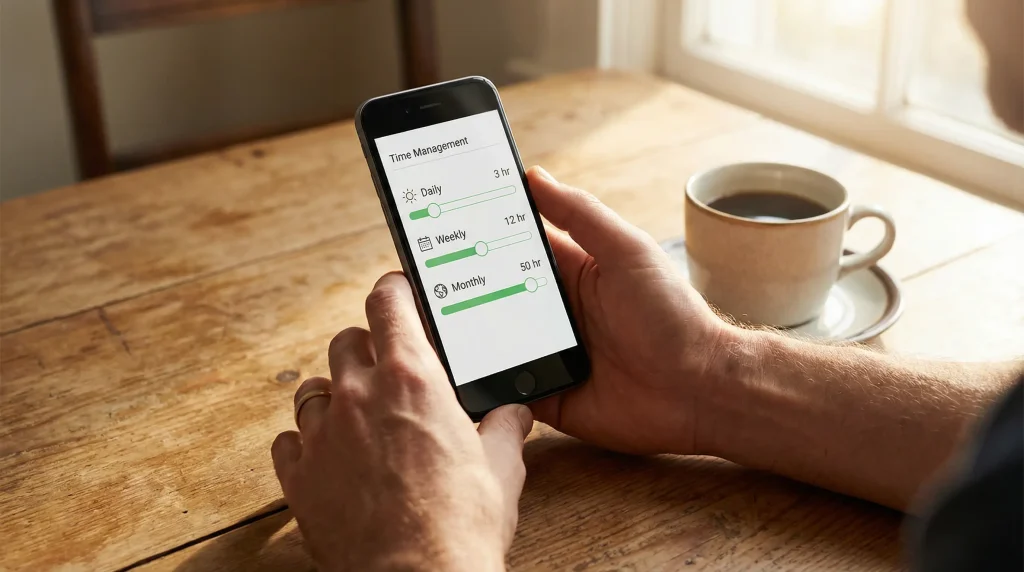
Deposit Limits Are the Most Underused Safety Tool in Online Gambling
They take ten seconds to set and protect you 24 hours a day. Yet the majority of UK casino players have never activated a deposit limit on any of their accounts. It’s a strange gap — not because deposit limits are complicated, but because they’re so obviously useful that ignoring them requires active effort. Every UKGC-licensed casino is required to offer them. The setting is always there, buried in the responsible gambling section of your account, waiting to be configured. Almost nobody bothers.
A deposit limit caps the total amount you can deposit into your casino account over a chosen period — daily, weekly, or monthly. Once the limit is reached, the casino must reject any further deposit attempts until the period resets. You set the amount. You choose the timeframe. The system enforces it without negotiation, without exception, and without requiring you to exercise willpower at the moment when willpower is least reliable. That last point is the one that matters most. Deposit limits work because they move the decision about how much to spend from the heat of a session to the calm of a settings page.
The psychology here is well understood. During active play, especially after a loss, the urge to deposit more is driven by emotional arousal — frustration, the desire to recover, the irrational conviction that the next round will be different. Deposit limits remove the option entirely. You cannot chase a loss beyond your limit no matter how compelling the impulse feels. The decision was already made, by a calmer version of yourself, at a time when the maths of the situation was clearer.
There’s no penalty for setting a deposit limit. It doesn’t affect your bonus eligibility at most casinos. It doesn’t flag your account for additional checks. It doesn’t restrict your ability to withdraw winnings or use any other feature of the platform. It simply places a ceiling on deposits — nothing more, nothing less. The downside of setting one is effectively zero. The downside of not setting one is whatever you deposit during a session you later wish you hadn’t. For a tool with that ratio of cost to benefit, the adoption rate should be universal. It isn’t. That’s the gap this article exists to close.
Daily, Weekly and Monthly: Which Limit Structure Works Best
A monthly limit of £200 feels generous until you realise it allows a £200 session on day one. That’s the structural problem with relying on a monthly limit alone — it constrains total spending across the period but does nothing to prevent concentration of that spending in a single session. And a single session, particularly one driven by chasing losses, is where the damage typically occurs.
Most UKGC-licensed casinos offer three timeframes for deposit limits: daily, weekly, and monthly. You can set one, two, or all three simultaneously, and where multiple limits are active, the most restrictive one takes precedence at any given moment. Setting a daily limit of £20 alongside a monthly limit of £200 means you can never deposit more than £20 in a single day, even if you’re well below the monthly cap. This layered approach is the most effective configuration because it addresses both total expenditure and session-level impulse.
A daily limit is the most protective against impulsive behaviour. It caps the damage from any single bad session to a fixed amount, regardless of how intense the urge to deposit more becomes. The trade-off is that a very tight daily limit can feel restrictive on days when you’ve planned a longer session — but that’s an argument for setting the limit at a level you’re comfortable with, not for abandoning the limit entirely. If you regularly play three times a week and want to spend no more than £100 a month, a daily limit of £15–20 achieves that while preventing any single session from consuming the entire monthly budget.
A weekly limit adds a middle layer. It’s useful for players whose sessions vary in length and frequency but who want a hard cap that prevents a bad week from spiralling. If your daily limit is £20 but you don’t want to deposit £140 across seven consecutive days, a weekly limit of £50 or £75 provides that secondary constraint. It catches patterns that a daily limit alone might miss — like depositing the daily maximum every day for a week straight.
The monthly limit works best as a ceiling rather than a primary control. It defines the absolute maximum you’re prepared to spend on gambling in a given month, and it should be set relative to your disposable income — the money that remains after rent, bills, food, savings, and every other financial obligation is met. If a monthly gambling budget of £100 would require you to cut back on essentials, the limit needs to be lower. If you can absorb £200 without affecting your financial stability, then £200 is a reasonable figure. The number should feel slightly conservative. If it feels generous, it’s probably too high.
The most practical approach is to set all three limits in combination: a daily limit that prevents session-level damage, a weekly limit that catches escalating patterns, and a monthly limit that anchors the whole structure to your actual budget. Configuring this takes under a minute in your account settings. The protection it provides runs continuously, invisibly, and without requiring any further action on your part.
The 2026 Mandatory Prompt: What New Players Will See
From 2026, every new customer is prompted to set a deposit limit before their first deposit. This is not a suggestion buried in the terms and conditions. It’s a mandatory step in the registration flow — a screen that appears between completing your account setup and making your first payment. The prompt requires an active response. You must either set a limit or explicitly decline to do so before proceeding.
The mandatory deposit limit prompt is one of the most player-facing changes introduced as part of the UKGC’s implementation of the 2023 White Paper on gambling reform. Previous rules required casinos to make deposit limits available, but there was no obligation to actively present them during registration. The result was predictable: limits existed in theory but went unused in practice because most players never navigated to the settings page where they were configured. The 2026 rule changes the default from passive availability to active engagement.
How this works in practice varies slightly between operators, but the core requirement is consistent. During account registration — after identity verification but before the first deposit — the player is shown a screen offering daily, weekly, and monthly deposit limit options. Pre-filled suggestions may be displayed based on industry-standard responsible gambling guidance, but the player is free to enter their own amounts. If the player chooses not to set any limit, they must confirm that decision explicitly — usually by checking a box or clicking a “No limit at this time” option. The refusal is logged, and the player may be reminded again at defined intervals.
The logic behind the prompt is rooted in behavioural research. People are far more likely to adopt a protective measure when it’s presented at the moment of decision than when it requires a separate, self-initiated action later. Asking someone to set a limit before they’ve deposited a penny is easier than asking them to do it after they’ve already established a pattern of play. The prompt catches people at the point of lowest resistance — before habit, emotional investment, and escalation have entered the picture.
For existing players who registered before the mandatory prompt was introduced, the rules don’t retroactively force a limit screen on their next login. However, operators are encouraged to surface deposit limit reminders through other channels — email, in-app notifications, or pop-ups triggered by specific activity patterns. The 2026 prompt targets the onboarding moment, which is the highest-leverage point for establishing healthy gambling habits from the start.
How to Change or Remove Limits
Lowering a limit is instant. Raising it comes with a mandatory cooling-off period. This asymmetry is the most important design feature of the entire deposit limit system, and it exists for a single reason: reducing a limit is always a protective action, while increasing one may not be.
If you decide your current limit is too high and want to lower it, the change takes effect immediately. There’s no waiting period, no approval process, and no questions asked. You log into your account, navigate to the responsible gambling settings, enter the new lower figure, and the system updates on the spot. This instant application ensures that the decision to tighten control is never delayed by bureaucratic friction.
Increasing a limit is a different process entirely. UKGC regulations require a cooling-off period — typically 24 hours, though some operators impose 48 or 72 hours — before any increase takes effect. During this window, you can cancel the request. The delay exists to prevent impulsive increases driven by the same emotional states that deposit limits are designed to counteract. If you’re requesting a higher limit because you’ve calmly reassessed your budget and determined you can afford more, the 24-hour wait changes nothing. If you’re requesting it because you’ve just lost your balance and want to deposit more, the cooling-off period is the gap that stops the decision from being acted on before reason returns.
Removing a limit entirely follows the same process as increasing one — a cooling-off period applies, and the removal is not instantaneous. Some casinos treat limit removal as an increase to “unlimited” and apply the standard waiting period. Others require explicit confirmation steps or present responsible gambling messaging as part of the removal flow.
If you have accounts at multiple casinos, deposit limits are set independently at each one. A £50 weekly limit at one casino does not affect your limit at another. This is a known limitation of the current system — aggregate spending across platforms is not tracked by any single tool available to players. For now, the most effective workaround is to set limits at every casino where you hold an account, and to keep your own record of total spending across all platforms. It requires manual discipline, but it closes a gap that the technology hasn’t yet addressed.
Set the Limit Before You Feel You Need One
The best time to set a deposit limit is when you don’t think you need one. That sounds counterintuitive — why restrict yourself if nothing’s wrong? — but it reflects a practical truth about how gambling problems develop. They don’t arrive with a warning label. They emerge gradually, through small escalations that feel reasonable in the moment and only become visible in retrospect. A deposit limit set during a calm, rational moment protects against the version of yourself that hasn’t arrived yet.
Think of it as financial pre-commitment. You decide in advance what gambling is worth to you in a given week or month, and you lock that decision in place so it can’t be overridden by emotion, fatigue, or the particular cocktail of neurochemistry that follows a losing streak. The limit doesn’t assume you have a problem. It assumes you’re human, and that humans are not consistently rational about money when excitement and loss are involved. That’s not a moral failing. It’s a well-documented feature of the species.
The players who benefit most from deposit limits are not those who set them after a crisis — though the tool serves that purpose too. They’re the players who configure them during registration, before the first deposit, as a standard part of their account setup. They treat deposit limits the way a sensible driver treats a seatbelt: not as a reaction to danger, but as a default precaution that costs nothing and protects against everything.
Every UK casino offers this tool. From 2026, every new player is prompted to use it during registration. The mechanics are simple, the configuration takes seconds, and the protection operates continuously in the background. There is no scenario in which setting a reasonable deposit limit makes your gambling experience worse. There are numerous scenarios in which not having one makes it significantly more expensive. The maths here isn’t complicated, and it doesn’t require you to believe you’re at risk. It only requires you to acknowledge that a free, invisible safety net has no downside — and to spend thirty seconds activating it.
Casino Deposit Limits UK — More on this topic at safeonlinecasino-uk.
See also Casino Affordability Checks UK.