
GAMSTOP Self-Exclusion UK: How It Works and What to Expect
 Available in GB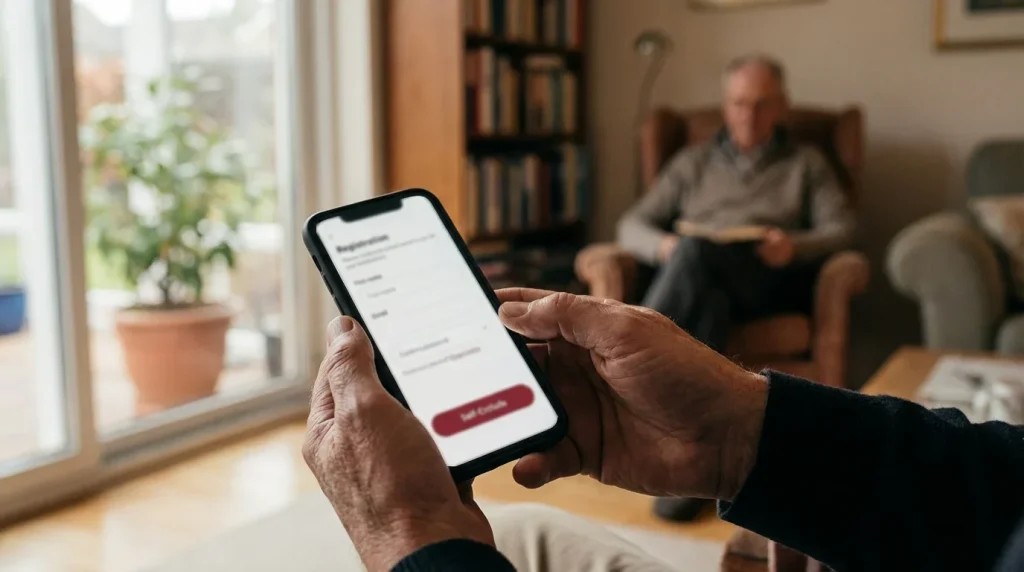
GAMSTOP Exists for One Reason — and It Works
GAMSTOP blocks you from every UKGC-licensed gambling site simultaneously — no exceptions, no workarounds. That single feature is the entire point of the service. When someone decides they need to stop gambling, the last thing that should be required is logging into dozens of individual casino accounts to self-exclude from each one separately. GAMSTOP replaces that fragmented process with a single registration that covers every operator licensed by the UK Gambling Commission.
The service has been operational since April 2018 and became a mandatory integration for all UKGC-licensed operators from 31 March 2020. Every online casino, betting site, bingo platform, and lottery provider holding a UK licence is required to check registrations against the GAMSTOP database. If your details are on the register, those operators must prevent you from opening new accounts and must close or suspend any existing ones. The obligation sits on the operator, not on you. Once you register, the system does the enforcement.
GAMSTOP is free to use. It’s run as a not-for-profit organisation and funded by the gambling industry itself. There is no fee to register, no subscription, and no hidden cost. The service exists because the evidence on self-exclusion is clear: when people who are experiencing gambling harm are given a reliable mechanism to block access, outcomes improve. Not for everyone, and not permanently in every case — but consistently enough that regulators made it a mandatory feature of the UK licensing framework.
What GAMSTOP does not do is block access to offshore or unlicensed gambling sites. Operators without a UKGC licence have no obligation to participate in the scheme, and some don’t. This is a limitation worth understanding clearly. GAMSTOP covers the regulated market comprehensively, but it cannot extend its reach beyond the jurisdiction of the UK Gambling Commission. For the vast majority of UK players — those using mainstream, licensed platforms — this limitation is theoretical rather than practical. But for someone actively seeking to circumvent their own exclusion, the gap exists. The point of GAMSTOP is not to make gambling impossible. It’s to make it significantly harder during a period when the person has recognised they need distance from it.
How to Register with GAMSTOP
Registration is free, online, and takes about five minutes. The process is deliberately straightforward because the moment someone decides to self-exclude is not the moment to introduce friction. GAMSTOP’s designers understood that a complicated sign-up process would deter exactly the people who need the service most.
To register, visit the GAMSTOP website and complete the online form. You’ll need to provide your full name, date of birth, email address, home address, and phone number. The system uses these details to match your identity against operator databases, so accuracy matters. If you’ve registered at different casinos using slight variations of your name or different email addresses, include all variations in your GAMSTOP registration. The form allows you to add multiple entries for each field. The more complete your details, the more effectively the system blocks your accounts.
Once submitted, your registration typically takes effect within 24 hours — though GAMSTOP states it can take up to 24 hours for all operators to process the request. During this window, there may be a brief gap before every site has updated its systems. Some players choose to self-exclude directly with their most-used casinos in parallel, as an additional layer of immediate protection while the GAMSTOP registration propagates.
You’ll receive an email confirmation once your registration is active. Keep this email. It serves as your record of the exclusion start date and the duration you selected. There is no account dashboard to log into, no app to download, and no ongoing interaction required on your part. GAMSTOP is not a tool you manage — it’s a barrier you put in place and then step away from.
One detail that catches some people off guard: GAMSTOP does not cover the National Lottery, society lotteries, or spread betting. These fall under different regulatory arrangements and are excluded from the scheme’s scope. If you need to restrict access to these products as well, separate action is required. For everything else — online casinos, sports betting, bingo, poker — a single GAMSTOP registration handles it. The process reflects its purpose: quick, comprehensive, and designed to remove as many obstacles as possible between the decision to stop and the moment it takes effect.
Exclusion Periods: 6 Months, 1 Year or 5 Years
You choose the duration. The minimum is six months. The longest is five years. There is no option shorter than six months, and there is no option for a permanent, irrevocable exclusion — though the five-year period functions as a long-term commitment for most practical purposes.
The three options reflect different levels of need. A six-month exclusion suits someone who recognises early signs of problematic play and wants to impose a cooling-off period. A year provides longer breathing room — enough time to address habits, seek support if needed, and re-evaluate the role gambling plays in their life. The five-year exclusion is designed for people who need the strongest possible barrier, whether because of severe gambling harm, financial difficulty, or a pattern of relapse after shorter exclusions.
Once you select a period, it is binding for its full duration. You cannot shorten it, pause it, or cancel it early. This is not an oversight — it’s a deliberate design choice. Self-exclusion works precisely because it removes the option to reverse course on a bad day. If you could call GAMSTOP at 2am and ask to be reinstated, the entire mechanism would fail. The commitment is the feature.
There’s a practical consideration worth noting when selecting your period. If you’re unsure whether six months is sufficient, choose a year. If you’re unsure about a year, choose five. You can always decide not to return to gambling when the exclusion ends. You cannot decide to shorten it once it’s begun. Erring toward the longer option costs nothing — the service is free regardless of duration — and provides a wider margin of protection. Nobody has ever regretted choosing too long a self-exclusion period. The opposite regret is considerably more common.
During the exclusion, your status is checked automatically by operators every time you attempt to log in, register, or deposit. You don’t need to do anything to maintain it. The exclusion runs in the background, silently enforced by every UKGC-licensed operator in the country.
What Happens to Existing Accounts and Balances
Your accounts will be closed and any remaining balance returned according to each operator’s procedure. This is the most immediate practical consequence of GAMSTOP registration, and it’s the area where the experience varies most between operators — not in principle, but in execution speed and communication quality.
When your GAMSTOP registration is processed, every UKGC-licensed operator holding an active account in your name is required to close or suspend that account. They must also cease all marketing communications — emails, push notifications, SMS offers — because sending promotional material to a self-excluded customer is a licence condition violation. If an operator continues to send you marketing after your GAMSTOP registration is confirmed, that’s a reportable breach.
Returning any remaining balance is where things occasionally require patience. Most operators will process withdrawals of existing funds within a few working days, using the most recent payment method on file. If your last deposit was via debit card, expect the refund to that card. If it was via PayPal or another e-wallet, the same route typically applies. Some operators may require you to contact customer support to initiate the withdrawal, particularly if the account has been fully suspended before you could request one yourself.
Pending bonuses, free spins, or loyalty points are generally forfeited upon account closure. This is standard across the industry and is usually stated in the operator’s terms and conditions. If you have a significant balance tied up in bonus wagering requirements, it’s worth contacting the casino directly before your GAMSTOP registration takes effect — though the decision to self-exclude should never be delayed for the sake of a bonus. No promotional offer is worth more than the protection the exclusion provides.
It is also worth noting that any pending withdrawals already in the processing queue should still be honoured. If you requested a withdrawal before self-excluding and it was approved, the operator is obligated to complete that payment. If they don’t, you have grounds for a formal complaint through the standard dispute resolution channels.
Returning After Self-Exclusion
When your exclusion period ends, reinstatement isn’t automatic — and that’s by design. GAMSTOP doesn’t simply switch off when the calendar date arrives. You must actively request removal from the register, which introduces a deliberate pause between the end of the exclusion and the moment you can gamble again. That pause exists to ensure the decision to return is conscious and considered, not reflexive.
To begin the removal process, you contact GAMSTOP after your exclusion period has expired. There is a mandatory 24-hour cooling-off period between your request and the actual removal. During those 24 hours, you can change your mind. If you don’t, your details are removed from the register, and operators will no longer block your access. You’ll be able to open new accounts or reactivate old ones, subject to each operator’s standard registration and verification procedures.
GAMSTOP also provides access to support resources during the removal process. You’ll be offered information about GamCare, BeGambleAware, and other organisations that can help you assess whether returning to gambling is the right decision. These aren’t obligatory consultations — nobody forces you to speak with a counsellor — but the resources are surfaced at exactly the moment when they’re most relevant.
If you’ve completed your exclusion period and decide you’re not ready to return, you can simply choose not to request removal. Your registration won’t lapse on its own. Alternatively, you can register for a new exclusion period — the same options apply: six months, one year, or five years. There’s no limit to how many consecutive exclusion periods you can serve. Some people use GAMSTOP once, return to gambling responsibly, and never need it again. Others find that repeated exclusion periods are part of their long-term approach to managing their relationship with gambling. Both patterns are normal, and neither carries any stigma within the system.
GAMSTOP Is the Circuit Breaker — Not the Solution
Self-exclusion buys you time. What you do with that time determines what happens next. GAMSTOP is extraordinarily effective at what it does — cutting access to licensed gambling platforms across the UK in a single step. But it doesn’t address the reasons someone gambles problematically in the first place. It stops the behaviour. It doesn’t resolve the driver.
This isn’t a criticism of the scheme. It’s a recognition of its scope. GAMSTOP is a barrier, and barriers work best when combined with other forms of support. GamCare offers free counselling and a confidential helpline. BeGambleAware funds treatment programmes and provides self-assessment tools. Gambling Therapy runs peer support forums and a dedicated mobile app. These services exist specifically for the period that GAMSTOP creates — the window of time when gambling is no longer competing for your attention, and other forms of support have room to work.
The people who benefit most from GAMSTOP tend to be those who treat it as the start of a process, not the end of one. Blocking access is the necessary first step. It removes the immediate temptation and creates space. But space alone doesn’t fill itself with healthier habits, financial recovery, or emotional clarity. That part requires something more than a database entry — and the resources to help with that part are available, free, and designed to work alongside the exclusion. The circuit breaker stops the overload. The repair work happens after the power is off.
GAMSTOP Self-Exclusion UK — More on this topic at safeonlinecasino-uk.
See also GamCare and BeGambleAware.